How to Soften the Appearance of 三白眼 Effectively
Sanpaku eyes

How to Soften the Appearance of 三白眼 Effectively

Unlock artistic techniques and practical tips to create a more balanced and harmonious eye aesthetic.

Explore the Art

Key Takeaways

  • ✓ 三白眼 (Sanpaku eyes) refers to eyes where the white sclera is visible either above or below the iris.
  • ✓ Culturally, it's often associated with certain personality traits or health indicators, though this lacks scientific basis.
  • ✓ Artistic and cosmetic techniques can effectively soften its appearance for a more balanced look.
  • ✓ Focus on creating an illusion of reduced white space through strategic makeup and styling.

How It Works

1
Understand Your Eye Type

Identify whether you have inferior Sanpaku (sclera below iris) or superior Sanpaku (sclera above iris). This understanding guides the most effective softening techniques.

2
Strategic Makeup Application

Utilize eyeliner, eyeshadow, and mascara to create depth, reshape the eye, and subtly cover exposed sclera. The goal is to draw attention to the iris and create an almond shape.

3
Hair and Brow Framing

Leverage your hairstyle and eyebrow shape to frame the eyes in a way that minimizes the visible white. Soft, flowing styles and well-groomed brows can significantly contribute.

4
Holistic Approach & Confidence

Combine external techniques with internal confidence. Remember, beauty is diverse, and embracing your unique features is key to true self-expression.

Understanding 三白眼: More Than Just Appearance
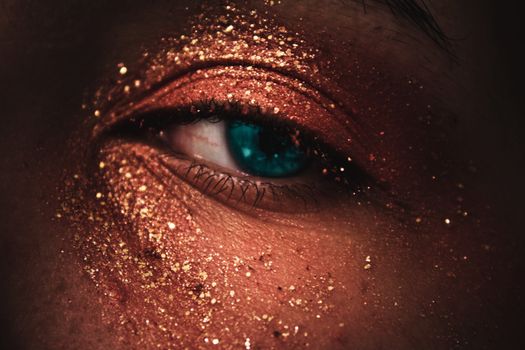
A stunning close-up of a human eye adorned with gold glitter makeup, showcasing beauty and fashion. Photo: adanvdo / Pexels
三白眼, pronounced 'Sanpaku gan' in Japanese, literally translates to 'three whites' eye. This term describes an eye condition where the white part of the eye (sclera) is visible either above or below the iris, giving the impression of the iris being smaller or positioned higher/lower than usual. While 'normal' eyes typically show sclera only on either side of the iris, Sanpaku eyes present a distinctive aesthetic. Historically, in various Eastern cultures, Sanpaku has been linked to traditional beliefs and superstitions, often associated with physical or spiritual imbalances, or even certain personality traits. For instance, inferior Sanpaku (sclera visible below the iris) was sometimes thought to indicate physical vulnerability, while superior Sanpaku (sclera visible above the iris) was linked to mental imbalance or danger. It's crucial to emphasize that these are cultural interpretations and lack scientific or medical basis. From a modern aesthetic perspective, the desire to soften the appearance of Sanpaku eyes often stems from a preference for a more 'balanced' or 'gentle' gaze, aligning with contemporary beauty standards that favor a larger, more central-looking iris. Many individuals seek ways to achieve this not out of concern for health or destiny, but simply to enhance their perceived facial harmony and confidence. Understanding the underlying anatomy and the cultural nuances surrounding Sanpaku is the first step towards approaching its appearance with both sensitivity and artistic intent. Whether through makeup, hairstyling, or even certain lifestyle considerations, the goal is to create an illusion that draws attention away from the exposed sclera and towards the captivating depth of the iris. This article will delve into practical, artistic methods to achieve that desired softening effect, moving beyond traditional interpretations to embrace modern aesthetic solutions. For a broader perspective on facial aesthetics, consider exploring the art of facial symmetry.

Strategic Makeup Techniques for a Softer Gaze

Makeup is arguably the most effective and immediate tool for softening the appearance of 三白眼. The core principle involves creating optical illusions that minimize the visible sclera and emphasize the iris, making the eye appear more rounded and centrally focused. For inferior Sanpaku (sclera below the iris), the strategy is to visually 'lower' the upper lash line and 'raise' the lower lash line. This can be achieved with a dark eyeliner applied thickly along the upper lash line, extending slightly past the outer corner to create a subtle winged effect that draws the eye upwards. On the lower lash line, instead of lining the waterline with a dark color, which can make the eye appear smaller and emphasize the white, use a nude or white eyeliner on the waterline to brighten and open the eye. Then, apply a soft, smudged brown or grey eyeshadow just below the lower lash line, blending downwards slightly to create a shadow that disguises the exposed sclera. Mascara should be applied generously to the upper lashes, curling them upwards to further open the eye. For superior Sanpaku (sclera above the iris), the goal is to 'raise' the lower lash line and 'lower' the upper lash line. Here, focus on applying dark eyeliner to the upper waterline (tightlining) to reduce the visible white above the iris. A thin line of dark eyeliner on the upper lash line can also help, but avoid thick, dramatic wings that might lift the eye too much. On the lower lash line, a dark, smudged eyeliner applied directly to the lash line and slightly blended upwards can help to 'fill in' the space. Mascara should be concentrated on the lower lashes, extending them downwards to balance the eye. In both cases, eyeshadow plays a crucial role. Opt for medium to dark matte shades on the outer corners of the eyelids to add depth and create a more elongated, almond shape. Avoid very light, shimmery shades on the center of the lid, as these can draw attention and make the eye appear rounder, potentially accentuating the Sanpaku. Blending is key to a natural, softened look. Remember to choose colors that complement your skin tone and eye color for the most harmonious effect. Practice is essential to master these techniques, allowing you to tailor them precisely to your unique eye shape and desired outcome.

Our partners at mintj.org offer related services.

Hair, Brows, and Accessories: Holistic Framing

Beyond direct eye makeup, a holistic approach involving your hairstyle, eyebrow shaping, and even choice of accessories can significantly contribute to softening the appearance of 三白眼. These elements work together to frame the face and subtly redirect focus, creating an overall impression of balance and harmony. Let's start with eyebrows. Well-groomed and appropriately shaped eyebrows can act as a natural frame for your eyes, influencing their perceived shape and size. For Sanpaku eyes, a slightly straighter or gently arched brow can be more flattering than a high, dramatic arch. A high arch can sometimes draw attention upwards, potentially emphasizing superior Sanpaku. Filling in sparse areas and extending the brow ever so slightly at the tail can also help to elongate the eye area, making the iris appear more central. Using a brow pencil or powder that matches your hair color, or is one shade lighter, creates a natural, soft look. Similarly, your hairstyle can play a pivotal role. Soft, layered hairstyles that gently frame the face can soften harsh lines and draw attention away from the immediate eye area. Bangs or fringes, especially soft, wispy ones that gently sweep across the forehead, can be particularly effective. They can subtly cover the upper part of the face, reducing the perceived height of the forehead and, by extension, the space above the eyes, which can be beneficial for superior Sanpaku. For inferior Sanpaku, hairstyles that add volume to the sides of the face can help balance the overall facial structure. Avoid very severe, pulled-back hairstyles that expose the entire face and draw direct attention to the eyes. Additionally, accessories like glasses can be incredibly helpful. Frames that are slightly oversized or have a thicker upper rim can create a visual 'shadow' that subtly conceals some of the visible sclera, especially for superior Sanpaku. For inferior Sanpaku, frames that are a bit deeper vertically can help balance the lower eye area. The key is to choose frames that complement your face shape and eye position, rather than drawing more attention to the Sanpaku itself. By thoughtfully integrating these elements – eyebrows, hairstyle, and accessories – you create a comprehensive strategy that works in conjunction with your makeup to achieve a beautifully softened and harmonized look. For more insights on blending different aesthetic elements, check out the principles of visual balance in art.

Common Mistakes and Expert Tips for Success

When attempting to soften the appearance of 三白眼, it's easy to fall into certain traps that might inadvertently accentuate the very features you're trying to minimize. Being aware of these common mistakes and adopting expert tips can significantly improve your results and lead to a more natural, harmonious look. **Common Mistakes to Avoid:** * **Over-lining the lower lash line with dark eyeliner (for inferior Sanpaku):** This can make the eye appear smaller and draw more attention to the white space below, counteracting your goal. * **Using too much shimmer on the inner corner or center of the lid:** While brightening, excessive shimmer can make the eye look rounder and highlight the exposed sclera. * **Harsh, highly arched eyebrows:** These can pull attention upwards and away from the eye, or in some cases, emphasize superior Sanpaku. * **Skipping mascara or using a non-curling formula:** Mascara, especially on the upper lashes, is crucial for creating lift and opening the eye, which helps cover some of the white space. * **Ignoring blending:** Unblended eyeshadow or eyeliner lines can look harsh and unnatural, failing to create the soft, diffused effect needed. * **Applying concealer too lightly or too darkly:** Proper concealer application under the eyes is vital to avoid drawing attention to dark circles, which can make the Sanpaku appear more prominent. **Expert Tips for Optimal Softening:** * **Focus on the Upper Lash Line:** For both types of Sanpaku, a well-defined upper lash line with eyeliner and curled mascara is your best friend. It creates a 'lid' effect that can subtly cover the white. * **Smudge, Don't Draw:** Especially on the lower lash line (for inferior Sanpaku), use a soft, smudged eyeshadow rather than a stark line. This creates a shadow effect that disguises the white without drawing attention. * **Consider Colored Contact Lenses:** If comfortable, colored contact lenses can be a game-changer. Lenses with a larger diameter (often called 'circle lenses') can make the iris appear larger and centrally located, significantly reducing the visible sclera. * **Embrace Your Natural Eye Shape:** Instead of trying to drastically change your eye shape, focus on enhancing its natural beauty while subtly minimizing the Sanpaku. Work *with* your features, not against them. * **Practice Makes Perfect:** Makeup application is an art. Experiment with different techniques, products, and colors in front of a mirror to see what works best for your unique eye shape and desired outcome. Take photos to compare results. * **Good Lighting is Key:** Always apply makeup in good, natural lighting to ensure even application and accurate color representation. By being mindful of these common pitfalls and integrating these expert tips into your routine, you can master the art of softening the appearance of 三白眼, achieving a look that is both balanced and beautifully natural.

Comparison

FeatureBest OptionAlternative 1Alternative 2
Eyeliner ApplicationThick upper, smudged lowerTightlining onlyHeavy lower waterline
Mascara FocusCurled upper lashesBoth upper & lowerLower lashes only
Eyebrow ShapeSoft, slightly straighterHigh archThin, over-plucked
Contact LensesLarger diameter (circle)Standard coloredClear prescription
Hair FramingSoft layers, wispy bangsPulled back, severeHeavy, blunt bangs

What Readers Say

"This article completely changed how I approach my makeup. The specific tips for inferior Sanpaku made such a difference, and I feel so much more confident."

Anya Sharma · Los Angeles, CA

"I always felt self-conscious about my Sanpaku eyes. The holistic framing advice, especially about eyebrows and hair, provided such fresh perspectives beyond just makeup."

David Chen · New York, NY

"Following the eyeliner and eyeshadow techniques, my eyes look noticeably softer and more balanced. It's amazing what a few strategic strokes can do!"

Sarah Lee · Seattle, WA

"While some tips were more relevant to my eye shape than others, the overall guidance on creating an illusion of reduced white space was incredibly helpful. A solid resource."

Marcus Johnson · Austin, TX

"As someone in the performing arts, subtle facial enhancements are key. The advice on softening the appearance of Sanpaku eyes has been invaluable for my stage presence."

Elena Rodriguez · Miami, FL

Frequently Asked Questions

Is 三白眼 a medical condition?

No, 三白眼 (Sanpaku eyes) is generally not considered a medical condition. It's an anatomical variation in eye shape where the sclera (white part of the eye) is visible above or below the iris. While historical cultural beliefs sometimes linked it to health, there is no scientific basis for this.

Will softening the appearance of 三白眼 make my eyes look unnatural?

When done correctly with the techniques described, the goal is to create a more balanced and harmonious look, not an unnatural one. The methods focus on subtle illusions and enhancements that complement your natural features, making your eyes appear softer and more centrally focused.

How do I know if I have inferior or superior 三白眼?

You have inferior Sanpaku if the white sclera is visible below your iris. You have superior Sanpaku if the white sclera is visible above your iris. Some individuals may have a combination, though it's less common to be equally pronounced.

Are there permanent solutions to change the appearance of 三白眼?

While makeup and styling offer temporary solutions, some cosmetic procedures, like certain types of blepharoplasty or canthoplasty, can alter the eye shape. However, these are surgical interventions with associated risks and should be thoroughly discussed with a qualified surgeon. Colored contact lenses offer a non-surgical, temporary 'permanent' solution for many.

How does 三白眼 differ from 'normal' eyes?

'Normal' eyes typically show the iris touching both the upper and lower eyelids, with sclera visible only on the sides. 三白眼 is characterized by visible sclera either above (superior Sanpaku) or below (inferior Sanpaku) the iris, giving the impression that the iris is floating or smaller than usual.

Who should consider softening the appearance of 三白眼?

Anyone who feels self-conscious about the appearance of their Sanpaku eyes and desires a more balanced, softer, or harmonious gaze can consider these techniques. It's purely an aesthetic choice driven by personal preference and confidence.

Are there any risks associated with using makeup to soften 三白眼?

The risks are minimal and generally pertain to standard makeup use, such as allergic reactions to products or eye irritation if makeup gets into the eye. Always use high-quality, hypoallergenic products and remove makeup thoroughly before sleep to maintain eye health.

What are the emerging trends in eye aesthetics for softening 三白眼?

Beyond traditional makeup, there's a growing trend towards subtle semi-permanent cosmetic tattooing (like lash line enhancement) and the use of specialized contact lenses. Holistic beauty practices that emphasize overall facial harmony and self-acceptance are also gaining traction, encouraging individuals to embrace and enhance their unique features.

Embrace the art of enhancing your unique beauty. By applying these expert techniques, you can effectively soften the appearance of 三白眼 and achieve a gaze that reflects confidence and harmony. Start your journey to a more balanced and captivating look today.

Topics: Sanpaku eyes三白眼 makeupeye aestheticsbeauty techniquescosmetic enhancement
Leo List
Brampton weed
Adultwork