How to Appreciate Modern Art: Unlock Its Hidden Meanings
how to appreciate modern art

How to Appreciate Modern Art: Unlock Its Hidden Meanings

Dive into the vibrant world of modern art and discover how to connect with its diverse forms and profound messages.

Start Your Journey

Key Takeaways

  • ✓ Modern art encompasses a vast period from the 1860s to the 1970s, challenging traditional conventions.
  • ✓ Appreciating modern art often requires understanding the historical and cultural context of its creation.
  • ✓ Personal connection and emotional response are as valid as intellectual analysis in art appreciation.
  • ✓ There's no single 'right' way to interpret modern art; embrace your unique perspective.

How It Works

1
Define 'Modern Art'

Understand the broad historical period and movements it covers, from Impressionism to Abstract Expressionism. This lays the groundwork for contextual understanding.

2
Contextualize the Artwork

Research the artist, their intentions, and the societal forces influencing their work. Knowing 'why' something was made deepens appreciation.

3
Engage Visually and Emotionally

Spend time looking, observing details, and noting your gut reactions before seeking external interpretations. Your initial response is a crucial entry point.

4
Explore Different Interpretations

Read expert analyses, discuss with others, and consider various perspectives, but always return to your own experience. This enriches your understanding without dictating it.

Demystifying Modern Art: A Historical Perspective
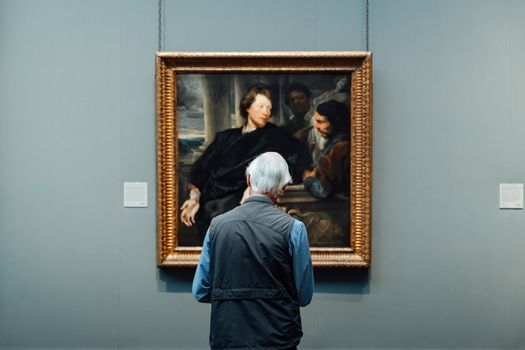
Senior admiring a classic painting in an English art gallery. Engrossed in art appreciation. Photo: Miguel González / Pexels
To truly grasp how to appreciate modern art, we must first understand what it is and, perhaps more importantly, what it isn't. The term 'modern art' is often used loosely, sometimes interchangeably with 'contemporary art,' leading to confusion. However, in art history, modern art generally refers to a period spanning roughly from the 1860s to the 1970s. This era was characterized by a radical departure from traditional, academic art, which had long emphasized realistic representation, mythological narratives, and classical ideals. Artists of the modern era sought to break free from these constraints, exploring new ways of seeing, new materials, and new subject matter. They questioned the very definition of art, pushing boundaries and challenging societal norms. Key movements within modern art include Impressionism, with its focus on light and fleeting moments; Post-Impressionism, which brought in greater emotional expression and symbolism; Fauvism, known for its vibrant, non-naturalistic colors; Cubism, which fractured and reassembled reality; Surrealism, delving into the subconscious mind; and Abstract Expressionism, emphasizing spontaneous, gestural application of paint. Each of these movements, and many others, contributed to a rich tapestry of innovation and experimentation. Understanding this historical progression is vital because modern art often responds to, or rebels against, what came before it. For instance, the Impressionists' loose brushwork was a direct reaction to the highly finished, polished surfaces of academic painting. Similarly, the abstraction of Kandinsky or Mondrian was a culmination of a century-long move away from literal representation. One of the biggest hurdles for newcomers is the perception that modern art is 'meaningless' or 'anyone could do that.' This sentiment often stems from a lack of context. When confronted with a Rothko color field painting or a Jackson Pollock drip painting, without understanding the philosophical underpinnings, the artistic intentions, or the historical moment in which they were created, it's easy to feel alienated. However, once you delve into the motivations behind these works – the desire to express pure emotion, to explore spiritual dimensions, or to challenge the very act of painting – a new world opens up. Modern artists were often deeply engaged with the social, political, and psychological upheavals of their time, and their art reflects these complex realities. Furthermore, modern art often emphasizes the process of creation as much as, if not more than, the final product. The visible brushstrokes, the raw textures, the unconventional compositions are not flaws but deliberate choices designed to convey a particular experience or idea. By acknowledging this shift in artistic priorities, you begin to see modern art not as a failure to depict reality 'correctly,' but as a deliberate and powerful redefinition of what art can be. It's about ideas, emotions, and new ways of seeing, rather than just technical skill or literal representation. This foundational understanding is the first step in genuinely learning how to appreciate art in its modern forms.

Engaging with the Artwork: Beyond the First Glance

A visitor examines sculptures and paintings at an art museum. Photo: Adrien Olichon / Pexels
Once you have a grasp of the historical context, the next crucial step in how to appreciate modern art is to actively engage with individual artworks. This isn't a passive process; it requires focused attention and an open mind. Many people walk into a modern art gallery, glance at a piece for a few seconds, feel nothing, and move on, concluding that they 'don't get it.' However, true appreciation comes from sustained observation and introspection. Begin by simply looking. Stand in front of the artwork for a sustained period – five, ten, even fifteen minutes. What do you see? Don't immediately try to 'understand' it or find a narrative. Instead, observe the basic elements: colors, shapes, lines, textures, and composition. How are these elements arranged? What is the dominant color palette? Are the lines fluid or sharp, thick or thin? What kind of texture does the surface have – smooth, rough, layered? As you observe, pay attention to your immediate emotional and physical responses. Does the artwork evoke a particular mood – joy, unease, serenity, excitement? Do you feel drawn in or pushed away? Does your eye follow a particular path across the canvas? There's no right or wrong answer here; your personal reaction is a valid and important part of the experience. Modern artists often aimed to elicit a direct emotional or sensory response, bypassing purely intellectual understanding. For example, a Mark Rothko painting, with its shimmering fields of color, is designed to be experienced rather than deciphered. Standing close to it, allowing the colors to envelop you, is part of its intended impact. After your initial observation and emotional response, you can begin to ask more analytical questions. What materials did the artist use, and how do these materials contribute to the overall effect? Is there a sense of movement or stillness? Does the artwork remind you of anything else – a memory, a feeling, another piece of art? Consider the title of the artwork, if there is one. Titles can sometimes provide a hint or a starting point for interpretation, but don't let them dictate your entire understanding. Sometimes, a deliberately ambiguous title encourages the viewer to bring their own meaning. It's also beneficial to research the artist's specific intentions or philosophy, if available. Many modern artists wrote extensively about their work, or their manifestos provide insight into their goals. For instance, understanding Piet Mondrian's desire to express universal harmony through geometric abstraction transforms a simple grid of primary colors into a profound philosophical statement. Similarly, knowing about Frida Kahlo's life experiences and her use of surrealism to depict personal pain enriches the viewing of her self-portraits. By combining careful observation, personal emotional response, and informed inquiry, you move beyond mere looking to a deeper, more meaningful engagement with modern art.

Developing Your Personal Connection: Finding Meaning in Modern Art

A woman sitting on a sofa, admiring abstract art in a minimalist setting. Photo: www.kaboompics.com / Pexels
The ultimate goal in learning how to appreciate modern art isn't to memorize names and dates, or to parrot expert opinions, but to develop your own personal connection and find meaning that resonates with you. Modern art, perhaps more than any other period, invites and even demands subjective interpretation. Because it often moves away from literal representation, it creates space for the viewer to project their own experiences, emotions, and thoughts onto the artwork. This can be intimidating at first, as we are often conditioned to seek a single, definitive 'correct' interpretation. However, embracing this subjectivity is liberating. Start by trusting your instincts. If a piece evokes a strong feeling in you, positive or negative, explore why. What elements of the artwork trigger that response? Is it the color, the composition, the implied narrative, or something else entirely? Your personal history, your cultural background, and your current mood will all influence your interaction with art, and this is perfectly valid. For example, a piece exploring themes of alienation might resonate deeply with someone who has felt isolated, while another person might find it unsettling. Both responses are legitimate. Don't be afraid to ask 'what if' questions. What if the artist had used different colors? What if the shapes were softer? How would that change the impact? This kind of imaginative engagement helps you understand the deliberate choices the artist made and their effect. Discussion with others can also be incredibly enriching. Visiting a gallery with a friend and sharing your individual interpretations can open up new avenues of thought and reveal aspects of the artwork you might have missed. Hearing different perspectives doesn't mean you have to abandon your own; rather, it broadens your understanding of the artwork's potential meanings. Furthermore, consider the broader cultural conversations that modern art often sparks. Many modern artists were social commentators, political activists, or philosophical thinkers. Their work might challenge prevailing power structures, comment on industrialization, explore psychological states, or question traditional notions of beauty. Engaging with these deeper layers can transform a seemingly abstract piece into a powerful statement about the human condition or society. For instance, understanding the Dada movement's anti-art stance in response to the horrors of World War I gives context to their seemingly nonsensical creations. Finally, remember that appreciation is a journey, not a destination. Your understanding and connection with modern art will evolve over time as you see more, learn more, and reflect more. Some pieces might click immediately, while others might remain enigmatic for years before a sudden flash of insight. Be patient with yourself, remain curious, and allow the art to speak to you in its own way. The beauty of modern art lies in its diversity and its capacity to provoke thought and emotion, offering a unique opportunity for self-discovery and a deeper engagement with the world around us. This continuous process of exploration is key to mastering art appreciation techniques.

Common Pitfalls and Practical Tips for Engaging with Modern Art

Three adults analyze black and white portraits on a brick wall promoting diversity and equality. Photo: cottonbro studio / Pexels
Navigating the world of modern art can sometimes feel daunting, but being aware of common pitfalls and employing practical strategies can significantly enhance your appreciation. Many people fall into the trap of looking for a literal story or a perfect representation of reality, which modern art often deliberately eschews. **Common Pitfalls to Avoid:** * **Expecting Literal Representation:** Modern art rarely aims for photographic realism. Instead, it prioritizes ideas, emotions, and new visual languages. Don't look for a mirror image of the world. * **Dismissing Without Context:** Judging a piece as 'bad' or 'easy' without understanding the artist's intentions, the historical period, or the artistic movement it belongs to is a common mistake. Context is king. * **Seeking a Single 'Correct' Answer:** There's often no single right interpretation. Modern art thrives on ambiguity and invites personal meaning-making. Embrace the multiplicity of perspectives. * **Focusing Only on Technique:** While technique is important, modern art often values conceptual innovation and emotional impact over traditional craftsmanship alone. A 'messy' painting might be deliberately so to convey raw emotion. * **Feeling Intimidated:** Art galleries and museums can feel imposing. Remember, they are places for exploration and personal experience, not just for experts. Your opinion is valid. **Practical Tips for Enhanced Appreciation:** * **Start Small:** Don't try to conquer an entire museum in one go. Pick a few pieces or one specific exhibition and dedicate time to them. * **Read the Labels (But Don't Rely Solely on Them):** Gallery labels provide valuable context – artist, date, materials, and sometimes a brief explanation. Read them, but then form your own initial impression before letting the label guide you too much. * **Use Audio Guides/Apps:** Many museums offer audio guides or apps that provide insightful commentary, often from curators or the artists themselves, enriching your understanding. * **Attend Talks and Tours:** Curator talks, artist lectures, or guided tours can offer profound insights into the works and movements, helping you unlock their complexities. * **Keep a Journal:** Jot down your thoughts, feelings, and questions about pieces you encounter. This personal reflection deepens engagement and helps you track your evolving understanding. * **Visit Libraries and Online Resources:** Books, documentaries, and reputable art history websites (like MoMA, Tate, or Guggenheim) are excellent resources for deepening your knowledge of artists and movements. * **Revisit Artworks:** Your appreciation for a piece can change over time. Revisit artworks you initially didn't connect with; you might find new meaning. * **Engage with the Community:** Join art discussion groups, online forums, or even take an art history class. Discussing art with others can be incredibly illuminating. By adopting these strategies and avoiding common pitfalls, you will find yourself increasingly comfortable and enriched by the experience of engaging with modern art, moving from confusion to genuine appreciation.

Comparison

AspectTraditional ArtEarly Modern Art (e.g., Impressionism)Later Modern Art (e.g., Abstract Expressionism)
Primary GoalRealistic representation, narrative, moral instructionCapturing fleeting moments, light, subjective experienceEmotional expression, conceptual exploration, challenging norms
Subject MatterMythology, history, portraits, religious scenesLandscapes, cityscapes, everyday life, portraitsAbstract forms, color fields, gestures, subconscious imagery
Style/TechniqueSmooth finish, hidden brushstrokes, academic rulesVisible brushstrokes, vibrant color, emphasis on lightNon-representational, experimental materials, process-oriented
Viewer EngagementRecognize subject, appreciate skill, understand narrativeObserve, feel atmosphere, appreciate subjective viewInterpret, feel emotion, question, find personal meaning

What Readers Say

"This guide completely transformed how I view modern art. I used to walk past abstract pieces feeling lost, but now I know how to engage and find my own meaning. It's truly empowering!"

Sarah J. · Brooklyn, NY

"I always wanted to appreciate modern art but felt I lacked the 'artistic eye.' This article broke down the barriers, offering practical steps to connect with even the most challenging pieces. Highly recommend!"

David K. · Los Angeles, CA

"Following the tips here, I spent 10 minutes in front of a Rothko painting last week, and for the first time, I felt an actual emotional response. It was a profound experience I wouldn't have had otherwise."

Emily R. · Chicago, IL

"While I still find some modern art difficult, this guide provided an excellent framework. The historical context section was particularly helpful in understanding the 'why' behind the movements."

Mark T. · Seattle, WA

"As an art student, I found this article to be a fantastic refresher and a great resource for explaining art appreciation to friends who are new to the subject. It emphasizes the personal journey, which is crucial."

Jessica L. · Miami, FL

Frequently Asked Questions

What is the biggest misconception about modern art?

The biggest misconception is that modern art is 'meaningless' or 'easy to make' because it often doesn't depict reality literally. In truth, it's rich with conceptual depth, emotional expression, and often challenges viewers to think differently, requiring intellectual and emotional engagement.

Why do I often feel confused or alienated by modern art?

Feeling confused is common because modern art often rejects traditional rules of beauty and representation. It requires you to step away from expecting a clear narrative and instead focus on colors, shapes, textures, and your personal emotional response, often needing context to unlock its meaning.

How can I start to understand a specific modern artwork?

Begin by observing it for several minutes without judgment, noticing colors, forms, and your immediate feelings. Then, read the label for context, research the artist and movement, and consider how the artwork makes you feel or what questions it raises for you.

Is there a 'right' way to interpret a modern artwork?

No, there isn't a single 'right' way. Modern art often encourages subjective interpretation. While understanding the artist's intent and historical context is valuable, your personal emotional and intellectual response is equally valid and forms a crucial part of appreciating the artwork.

How does modern art differ from contemporary art?

Modern art generally refers to the period from the 1860s to the 1970s, encompassing movements like Impressionism, Cubism, and Abstract Expressionism. Contemporary art refers to art made from the 1970s to the present day, often building upon or reacting to modern art's innovations.

Who should try to appreciate modern art?

Anyone with an open mind and a curiosity to explore new perspectives should try to appreciate modern art. It's for those who enjoy intellectual challenges, emotional depth, and are willing to engage with art beyond traditional beauty standards.

Is it okay if I still don't like a modern artwork after trying to appreciate it?

Absolutely. Appreciation doesn't always equate to liking. The goal is to understand, engage, and connect, but personal taste remains. It's perfectly fine to understand a piece's significance without it becoming your favorite.

What is the future trend for appreciating modern art?

Future trends will likely involve more immersive digital experiences, virtual reality tours, and AI-driven contextualization tools that make modern art more accessible and interactive, enhancing personal engagement and understanding for a wider audience.

Embark on your journey to truly appreciate modern art today. By engaging with its history, its forms, and your own reactions, you'll unlock a richer, more meaningful understanding of this transformative period in human creativity. Start exploring, questioning, and connecting – the world of modern art awaits your unique perspective.

Topics: how to appreciate modern artunderstanding modern artdeciphering contemporary artmodern art interpretationart appreciation tips
Leo List
Brampton weed
Adultwork