✓ The Renaissance originated in Florence, Italy, in the 14th century.
✓ Humanism was a central philosophical tenet, emphasizing human potential and achievement.
✓ Key artistic innovations included linear perspective, chiaroscuro, and sfumato.
✓ Major periods include the Early, High, and Late Renaissance, each with distinct characteristics.
How It Works
1
Understand the Precursors
Before diving into the Renaissance, grasp the artistic and philosophical climate of the late Middle Ages. This context reveals the dramatic shift in thought and expression.
2
Explore Italian Origins
Focus on Florence, Italy, as the birthplace of the Renaissance. Understand how its economic and political landscape fostered artistic innovation and patronage.
3
Identify Key Innovations
Learn about the groundbreaking techniques and concepts that defined Renaissance art. Linear perspective, anatomical accuracy, and oil painting transformed artistic possibilities.
4
Recognize Master Artists & Works
Familiarize yourself with the iconic artists and their masterpieces. Connecting names like Leonardo, Michelangelo, and Raphael to their works deepens understanding.
The Dawn of a New Era: Early Renaissance Art
Photo: Efrem Efre / Pexels
The history of Renaissance art begins in the bustling city-states of Italy, particularly Florence, during the 14th century, laying the groundwork for a cultural explosion that would redefine Western civilization. This period, often called the Proto-Renaissance or Early Renaissance, marked a decisive break from the rigid, symbolic art of the Byzantine and Gothic eras. Artists began to look back to classical antiquity for inspiration, rediscovering ancient Greek and Roman ideals of beauty, proportion, and humanism. Humanism, a philosophical movement that emphasized human potential and achievement, became the intellectual bedrock of the Renaissance, shifting focus from the divine to the individual and earthly experience. This newfound appreciation for humanity manifested in art through a greater emphasis on realism, emotion, and naturalism.
One of the pivotal figures of this transformative period was Giotto di Bondone (c. 1267–1337). While technically preceding the full flowering of the Renaissance, Giotto's revolutionary approach to painting laid the essential foundations. His frescoes, such as those in the Scrovegni Chapel in Padua, introduced a sense of three-dimensionality, emotional depth, and narrative realism that was unprecedented. Figures were no longer flat, stylized icons but appeared to occupy real space, engaging with each other and the viewer with palpable human feeling. He utilized foreshortening and a rudimentary form of perspective to create illusions of depth, moving away from the hierarchical scaling common in medieval art. Giotto's innovations were crucial in setting the stage for later Renaissance masters, demonstrating the power of art to depict the human condition with profound psychological insight. His work showed artists how to convey drama and emotion through gesture and facial expression, a stark contrast to the often static depictions of earlier periods.
The 15th century saw the Early Renaissance truly take flight, with Florence at its heart. Patrons like the powerful Medici family fostered an environment where artistic innovation thrived, commissioning works that pushed the boundaries of technique and subject matter. Key developments included the mastery of linear perspective, a mathematical system for creating the illusion of depth on a two-dimensional surface, perfected by Filippo Brunelleschi and codified by Leon Battista Alberti. This innovation allowed artists to create highly realistic and rational spaces, making their paintings feel like windows into another world. Masaccio (1401–1428) was a master of this new perspective, exemplified in his groundbreaking fresco 'The Holy Trinity' in the Santa Maria Novella. His figures possessed a weight and monumentality, appearing as solid, corporeal beings rather than ethereal spirits.
Other significant artists of the Early Renaissance included Donatello (c. 1386–1466), whose naturalistic sculptures, such as his bronze 'David,' revived classical contrapposto and anatomical accuracy. Sandro Botticelli (c. 1445–1510) brought a lyrical grace and mythological themes to his paintings, most famously 'The Birth of Venus' and 'Primavera', blending classical motifs with a distinctive Florentine elegance. These artists, along with many others, collectively propelled art into an era of unprecedented naturalism, intellectual rigor, and emotional resonance. The emphasis on individual genius and the pursuit of beauty grounded in classical ideals became hallmarks of this foundational period in the history of art, setting the stage for the unparalleled achievements of the High Renaissance. The meticulous observation of nature, combined with a scientific approach to depicting reality, marked a profound departure from earlier artistic traditions. This period laid the intellectual and technical groundwork, making the subsequent explosion of creativity possible.
The Golden Age: High Renaissance Masterpieces
Photo: Alina Rossoshanska / Pexels
The High Renaissance, generally spanning from the late 1490s to the 1520s, represents the pinnacle of artistic achievement in the history of Renaissance art. This relatively brief but intensely productive period saw the emergence of titans whose works continue to define Western art: Leonardo da Vinci, Michelangelo, and Raphael. The artistic center shifted somewhat from Florence to Rome, largely due to the ambitious patronage of popes like Julius II, who sought to restore Rome to its ancient glory through monumental artistic commissions. During this era, the principles established in the Early Renaissance – humanism, naturalism, perspective, and classical revival – were brought to their highest levels of refinement and emotional expression. Artists achieved a harmonious balance between ideal beauty and realistic depiction, often infusing their subjects with profound psychological depth and grandeur.
Leonardo da Vinci (1452–1519) epitomized the Renaissance ideal of the 'universal man' – a painter, sculptor, architect, musician, scientist, inventor, and philosopher. His artistic innovations were profound. He mastered 'sfumato,' a technique of blending colors or tones so subtly that they melt into one another, creating soft, hazy outlines and a dreamlike quality, famously seen in the enigmatic smile of the 'Mona Lisa.' His keen scientific observation informed his anatomical studies, allowing him to depict the human form with unparalleled accuracy and vitality, as demonstrated in his 'Vitruvian Man' and 'The Last Supper.' The latter, a fresco in Milan, revolutionized narrative painting through its dramatic composition, psychological intensity, and innovative use of perspective to draw the viewer into the scene. Leonardo's relentless pursuit of knowledge and his desire to understand the world around him deeply influenced his artistic output, making his works not just beautiful but also intellectually stimulating. He believed that art and science were intrinsically linked, each informing the other.
Michelangelo Buonarroti (1475–1564) was a sculptor, painter, architect, and poet whose work radiated immense power and emotion. His 'David,' carved from a single block of marble, is a masterpiece of anatomical perfection and psychological intensity, capturing the moment before battle with a tension that vibrates through the stone. As a painter, his most famous work is the ceiling of the Sistine Chapel, a monumental undertaking that depicts scenes from Genesis with an astonishing breadth of imagination and muscular dynamism. The 'Creation of Adam' is perhaps the most iconic panel, symbolizing the divine spark of life being transferred to humanity. Michelangelo’s figures are often heroic and idealized, yet imbued with a profound sense of human struggle and spiritual yearning. His later work, such as 'The Last Judgment' on the Sistine Chapel altar wall, moved towards a more complex and emotional style, foreshadowing the Mannerist period. His ability to convey both physical and emotional power through his art remains unparalleled.
Raphael Sanzio (1483–1520), though dying young, left an indelible mark with his harmonious compositions, clear forms, and serene beauty. He is celebrated for his Madonnas, which combine idealized beauty with tender human warmth, and his monumental frescoes in the Vatican's Stanze della Segnatura. 'The School of Athens' is a prime example of his genius, depicting an imagined gathering of ancient philosophers, each figure perfectly composed and integrated into a grand architectural setting, embodying the Renaissance spirit of intellectual inquiry and classical revival. Raphael's art is characterized by its grace, clarity, and balance, representing the classical ideal of the High Renaissance. His ability to synthesize the innovations of Leonardo and Michelangelo into his own distinctive style made him one of the most beloved artists of his time. The works of these three masters defined an era, establishing benchmarks for artistic excellence that continue to inspire and challenge artists today.
Beyond Italy: The Northern Renaissance and its Unique Contributions
Photo: Magda Ehlers / Pexels
While the history of Renaissance art is largely centered on Italy, a distinct and equally significant artistic movement flourished simultaneously in Northern Europe, known as the Northern Renaissance. While sharing the broader Renaissance spirit of humanism and a renewed interest in naturalism, the Northern Renaissance developed its own unique characteristics, influenced by different cultural, religious, and economic factors. Unlike the Italian focus on classical antiquity, Northern artists often maintained stronger ties to Gothic traditions, emphasizing intricate detail, vibrant symbolism, and a deep engagement with religious narratives. The development of oil painting, perfected in the North, allowed for unprecedented levels of detail, luminous color, and subtle atmospheric effects that differed significantly from the fresco and tempera techniques prevalent in Italy.
Flanders, particularly cities like Bruges and Ghent, became a vibrant hub for Northern Renaissance art. Jan van Eyck (c. 1390–1441) is often credited with perfecting oil painting techniques, achieving extraordinary realism and textural detail. His masterpiece, 'The Ghent Altarpiece,' is a monumental work teeming with meticulously rendered details, from the shimmering jewels on garments to the individual hairs on faces, showcasing his unparalleled technical skill. Van Eyck's ability to capture light and texture with such precision created a sense of tangible reality that captivated viewers. His portraits, such as the 'Arnolfini Portrait,' are not merely likenesses but rich psychological studies, filled with intricate symbolism that hints at the lives and values of the sitters. These details often served to convey moral or religious messages, making the art deeply didactic.
Another towering figure was Rogier van der Weyden (c. 1399–1464), whose emotionally charged works, like 'The Descent from the Cross,' conveyed profound human suffering and piety. His figures often possess a more angular, expressive quality than their Italian counterparts, and his compositions are tightly organized to maximize emotional impact. The focus on intense spiritual devotion and the human experience of faith remained a central theme in Northern art, often depicted with a poignant realism that resonated deeply with the populace. This emotional depth, combined with the meticulous rendering of everyday objects and settings, created a powerful and accessible form of religious art.
Later Northern Renaissance artists, such as Albrecht Dürer (1471–1528) from Germany, served as a bridge between the Northern and Italian traditions. Dürer traveled to Italy, absorbing ideas about perspective, anatomy, and classical proportion, which he then integrated into his distinctively Northern style. He was a master printmaker, producing highly detailed woodcuts and engravings that disseminated Renaissance ideas across Europe. His self-portraits are particularly notable for their psychological insight and technical brilliance. Hieronymus Bosch (c. 1450–1516) stands as a unique and enigmatic figure, known for his fantastical, often nightmarish, and highly moralistic allegories, most famously 'The Garden of Earthly Delights.' His work delves into themes of sin, temptation, and human folly with an unparalleled imagination, offering a stark contrast to the harmonious idealism often found in Italian art.
The Northern Renaissance, while distinct, contributed immensely to the broader history of art. Its innovations in oil painting, its meticulous realism, and its profound engagement with spiritual and moral themes offered a rich alternative to the classical focus of Italy. The intricate details and symbolic language of Northern art provided a different lens through which to explore human experience and the divine, proving that the spirit of the Renaissance was not confined to one region but manifested in diverse and equally compelling forms across Europe. This period also saw the rise of landscape painting as a genre, often imbued with symbolic meaning, further expanding the scope of artistic expression.
The Decline and Legacy: From Mannerism to Enduring Influence
Photo: Mikhail Nilov / Pexels
The High Renaissance, with its pursuit of ideal beauty and harmonious balance, eventually gave way to new artistic currents. By the mid-16th century, a style known as Mannerism emerged, marking a transition from the classical ideals of the High Renaissance. Mannerism, literally meaning 'style' or 'manner,' often exaggerated the principles of the High Renaissance, leading to compositions that were more artificial, complex, and emotionally charged. Artists like Parmigianino, Pontormo, and Bronzino deliberately distorted figures, used elongated proportions, unsettling colors, and ambiguous spaces, moving away from the naturalism and clarity that defined the earlier period. This shift reflected a changing socio-political climate, including the Protestant Reformation and the Sack of Rome, which led to a sense of instability and questioning of established orders. Mannerism can be seen as an artistic response to the perceived perfection of the High Renaissance, where artists felt they had to find new ways to express themselves, often through intellectualized and sophisticated forms. Figures were often depicted in contorted poses, creating a sense of restless energy and dramatic tension. The focus shifted from universal ideals to individual artistic expression and virtuosity.
The decline of the Renaissance as a dominant artistic force wasn't an abrupt end but a gradual evolution into new styles like the Baroque. However, the legacy of Renaissance art is immeasurable and continues to shape Western culture and art to this day. The innovations in perspective, anatomy, chiaroscuro, and sfumato became foundational techniques for generations of artists. The emphasis on humanism profoundly influenced subsequent philosophical and scientific thought, placing the individual at the center of inquiry. The concept of the artist as a genius, a skilled intellectual rather than merely a craftsman, was firmly established during the Renaissance, elevating the status of artists in society.
Tips for Appreciating Renaissance Art:
* **Understand the Historical Context:** Research the specific events, patrons, and philosophical ideas of the time a piece was created.
* **Look for Symbolism:** Renaissance art is often rich with hidden meanings and allegories. Understanding common symbols can unlock deeper interpretations.
* **Analyze Composition:** Pay attention to how artists used perspective, balance, and figure arrangement to guide your eye and convey meaning.
* **Consider the Medium:** Recognize the challenges and possibilities of frescoes, oil paintings, and sculptures, and how they influenced the final work.
* **Visit Museums:** Nothing compares to seeing these masterpieces in person to appreciate their scale, color, and texture.
Mistakes to Avoid When Studying Renaissance Art:
* **Judging by Modern Standards:** Avoid applying contemporary aesthetic or moral values directly to historical art.
* **Focusing Only on Famous Names:** While iconic, many lesser-known artists made significant contributions.
* **Ignoring the Northern Renaissance:** Don't limit your study to Italy; the Northern Renaissance offers rich and distinct insights.
* **Overlooking the Patron's Role:** Patrons often dictated subject matter, scale, and even style, significantly influencing the art produced.
* **Expecting Pure Realism:** While naturalistic, Renaissance art often aimed for idealized beauty and symbolic representation, not photographic accuracy.
The enduring influence of Renaissance art is evident in its continuous study, its presence in global museums, and its inspiration for countless artists, writers, and thinkers across centuries. From the academic traditions of fine art to contemporary interpretations, the principles and aesthetic achievements of the Renaissance remain a cornerstone of artistic education and appreciation. It taught us to see the world, and ourselves, with new eyes, celebrating the beauty, complexity, and potential of the human spirit.
Comparison
Feature
Early Renaissance
High Renaissance
Northern Renaissance
Key Focus
Rediscovery & Foundation
Ideal Beauty & Harmony
Detail & Symbolism
Primary Location
Florence, Italy
Rome, Italy
Flanders, Germany
Dominant Medium
Fresco, Tempera
Fresco, Oil
Oil Painting
Perspective
Developing Linear
Mastered Linear
Empirical, less strict
Human Form
Naturalistic, developing anatomy
Idealized, anatomically perfect
Realistic, often expressive
Key Artists
Giotto, Masaccio, Donatello
Leonardo, Michelangelo, Raphael
Van Eyck, Dürer, Bosch
Emotional Tone
Emerging emotion, narrative
Serene, balanced, profound
Intense, devotional, symbolic
What Readers Say
★★★★★
"This article on the history of Renaissance art is incredibly thorough and engaging. It clarified so many concepts I'd only vaguely understood before, especially the distinction between Italian and Northern styles. A truly valuable resource for anyone passionate about art history."
Sophia G. · New York, NY
★★★★★
"As an art student, I found the breakdown of the Early, High, and Northern Renaissance periods exceptionally helpful. The way it explains the innovations of each artist makes their contributions much clearer. This is a top-tier guide to Renaissance art."
Marcus L. · Los Angeles, CA
★★★★★
"The depth of information provided here on the history of Renaissance art is outstanding. I particularly appreciated the insights into humanism's role and the detailed descriptions of key artistic techniques. My understanding of the era has significantly deepened."
Dr. Eleanor V. · Chicago, IL
★★★★★
"A very comprehensive overview, though I would have loved to see a bit more on women artists during the Renaissance, even if they were fewer in number. Still, the core content on the major movements and artists is excellent and well-researched."
James P. · Houston, TX
★★★★★
"I used this article to prepare for a trip to Italy, and it made visiting the museums so much more meaningful. Understanding the context and the artists' motivations truly enhanced my experience with the history of Renaissance art. Highly recommend!"
Chloe R. · Miami, FL
Frequently Asked Questions
What defines the history of Renaissance art?
The history of Renaissance art is defined by a renewed interest in classical antiquity, the philosophy of humanism, and groundbreaking artistic innovations. These include the mastery of linear perspective, anatomical accuracy, chiaroscuro, and sfumato, all contributing to a more realistic and emotionally resonant depiction of the human experience and the world.
Was Renaissance art only in Italy?
While Italy was the birthplace and primary hub of the Renaissance, a distinct and equally important movement known as the Northern Renaissance flourished in regions like Flanders and Germany. It shared humanist ideals but emphasized intricate detail, symbolism, and refined oil painting techniques, offering a unique contribution to the overall history of Renaissance art.
How did linear perspective change Renaissance art?
Linear perspective revolutionized Renaissance art by allowing artists to create the illusion of three-dimensional space on a two-dimensional surface. This mathematical system provided a rational and realistic way to depict depth, making paintings feel like windows into another world and significantly enhancing the naturalism of compositions.
Why is patronage important in Renaissance art history?
Patronage was crucial in the history of Renaissance art because wealthy individuals, families (like the Medici), and the Church commissioned most of the artworks. Their financial support allowed artists to dedicate themselves to their craft, undertake ambitious projects, and experiment with new techniques, directly fueling the artistic explosion of the era.
How does Renaissance art compare to Medieval art?
Renaissance art dramatically departed from Medieval art by emphasizing realism, humanism, and classical ideals over the symbolic and often stylized forms of the Middle Ages. Renaissance artists focused on anatomical accuracy, emotional depth, and realistic settings, in contrast to Medieval art's hierarchical scaling and often flat, iconic representations.
Who should explore the history of Renaissance art?
Anyone with an interest in art, history, philosophy, or cultural development should explore the history of Renaissance art. It offers profound insights into human creativity, societal shifts, and the enduring power of visual expression, enriching one's understanding of Western civilization.
Are there any ethical concerns in studying Renaissance art?
While the art itself is celebrated, historical context is important. Some Renaissance art was commissioned by figures involved in morally questionable practices, or depicted subjects from a perspective that may not align with modern sensibilities. A critical and informed approach to the historical context helps navigate these complexities.
What is the future trend in appreciating Renaissance art?
Future trends in appreciating Renaissance art involve increasing accessibility through digital platforms, virtual reality experiences, and interdisciplinary studies that connect art with science, philosophy, and social history. There's also a growing emphasis on re-evaluating lesser-known artists and diverse cultural influences within the broader Renaissance context.
Embark on your own journey through the unparalleled history of Renaissance art. Discover the masterpieces, understand the groundbreaking techniques, and connect with the human spirit that defined this extraordinary era. Dive deeper and let the beauty and ingenuity of the Renaissance inspire you today.

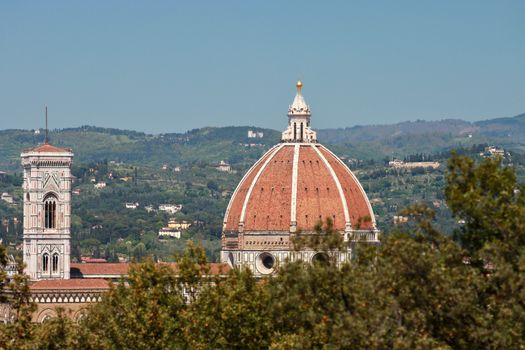 Photo: Efrem Efre / Pexels
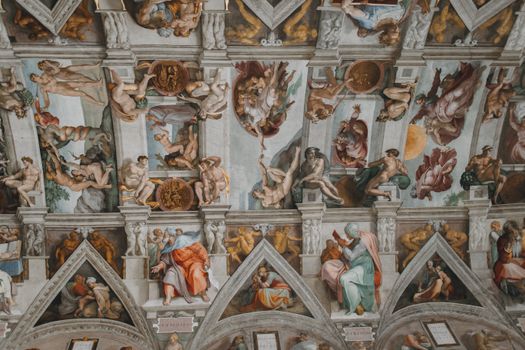 Photo: Alina Rossoshanska / Pexels
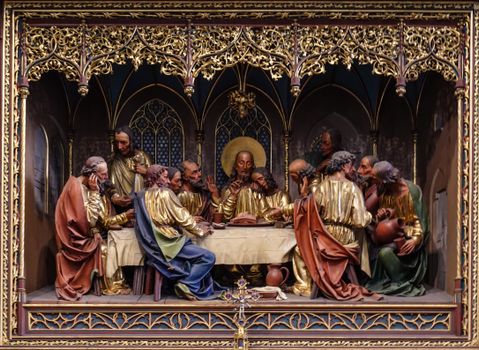 Photo: Magda Ehlers / Pexels
 Photo: Mikhail Nilov / Pexels