Different Types of Visual Arts Explained: Your Ultimate Guide
different types of visual arts explained

Different Types of Visual Arts Explained: Your Ultimate Guide

Unravel the rich tapestry of human creativity, exploring the origins, techniques, and impact of various visual art forms.

Discover Art Now

Key Takeaways

  • ✓ Visual arts encompass a vast spectrum of creative disciplines, primarily enjoyed through sight.
  • ✓ Categorization often includes fine arts, decorative arts, and contemporary art forms.
  • ✓ Understanding the historical context is crucial for appreciating the evolution of visual arts.
  • ✓ Technological advancements continue to introduce new and exciting visual art mediums.

How It Works

1
Define Visual Art

Begin by understanding visual art as any art form primarily perceived by the eye. This broad definition sets the stage for exploring its many branches.

2
Explore Core Categories

Delve into major divisions like traditional fine arts (painting, sculpture), decorative arts, and emerging digital forms. Each category offers unique characteristics and histories.

3
Understand Key Characteristics

Learn about the defining features of each art type, such as materials, techniques, historical periods, and cultural significance. This helps in distinguishing between them.

4
Appreciate Evolution & Impact

Recognize how visual arts have transformed over centuries, influenced by societal changes and technological innovations. Consider their lasting impact on culture and communication.

Unpacking the World of Fine Arts: Painting, Sculpture, and Drawing
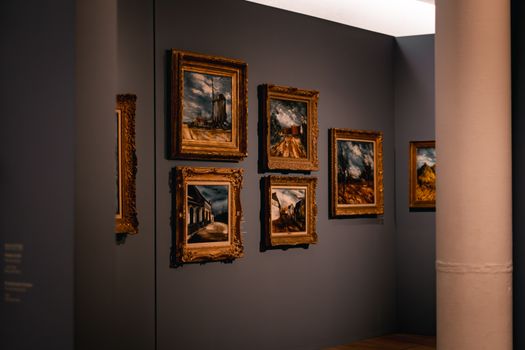
Elegant art gallery with framed paintings on a dimly lit wall, showcasing artistic works. Photo: Josue Canceco / Pexels
The realm of visual arts is vast and varied, with its foundations deeply rooted in what are traditionally known as the 'fine arts.' These forms – painting, sculpture, and drawing – have been central to human expression for millennia, evolving through countless cultures and technological shifts. Understanding these core disciplines is paramount to grasping the broader landscape of visual creativity. Painting, perhaps the most recognizable of the fine arts, involves applying pigment to a surface to create an image, design, or expression. Its history spans from the prehistoric cave paintings of Lascaux to the Renaissance masterpieces of Leonardo da Vinci, the Impressionistic innovations of Monet, and the abstract expressions of Jackson Pollock. Mediums have varied wildly, from fresco and tempera to oil, watercolor, acrylic, and digital painting, each offering unique textures, drying times, and visual effects. Each era and culture has imbued painting with its own distinct style, symbolism, and purpose, whether for religious devotion, historical documentation, portraiture, or pure aesthetic enjoyment. Exploring different art historical eras reveals how painting techniques and subjects have transformed. Sculpture, on the other hand, is the art of creating three-dimensional forms. Unlike the two-dimensional nature of painting, sculpture occupies space and can be viewed from multiple angles, offering a tactile and spatial experience. Traditional materials include stone (marble, granite), wood, metal (bronze, steel), clay, and plaster, though contemporary sculptors often employ found objects, plastics, light, and even ephemeral elements like ice or sand. From the monumental ancient Egyptian statues and classical Greek figures to the dynamic forms of Michelangelo and the abstract constructions of Henry Moore, sculpture has consistently pushed the boundaries of form and material. Its purpose ranges from commemorative monuments and religious idols to decorative pieces and conceptual installations. Drawing, often considered the most fundamental of the visual arts, is the act of making marks on a surface, typically paper, using instruments like pencils, charcoal, ink, pastels, or crayons. It serves as both an independent art form and a foundational skill for painting and sculpture, allowing artists to sketch ideas, refine compositions, and study forms. The immediacy and directness of drawing make it a powerful tool for capturing fleeting moments, detailed observations, and raw emotional expression. From the preparatory sketches of Renaissance masters to the intricate cross-hatching of Dürer and the expressive lines of Egon Schiele, drawing reveals the artist's hand and thought process in a uniquely intimate way. Together, these fine arts form the bedrock of visual artistic endeavor, offering profound insights into human creativity and cultural heritage. They continue to inspire and challenge artists today, even as new forms emerge.

Delving into Decorative and Applied Arts: Function Meets Beauty

Unique art installation of vintage furniture and bicycles suspended in mid-air at an exhibition. Photo: Blackcurrant Great / Pexels
Beyond the purely aesthetic and expressive realm of fine arts lies the equally rich domain of decorative and applied arts. These categories blur the lines between art and utility, focusing on objects that are both beautiful and functional, enriching our daily lives through their design and craftsmanship. While fine arts are often created for contemplation, decorative and applied arts are designed to be used, worn, or integrated into an environment, yet they retain a significant artistic component. Decorative arts encompass a wide array of objects intended to adorn and beautify spaces and individuals. This includes ceramics, glass art, textiles, furniture design, metalwork, jewelry, and interior design. Ceramics, for instance, transforms clay into functional vessels, tiles, or sculptural forms, with techniques ranging from ancient pottery to intricate porcelain and contemporary studio ceramics. Glass art, from stained-glass windows to blown glass vessels and intricate sculptures, plays with light and transparency, demonstrating remarkable skill and artistry. Textiles, including weaving, embroidery, tapestry, and fashion design, are ancient art forms that combine material, pattern, and color to create both practical items and expressive artworks. Furniture design merges ergonomics with aesthetics, creating pieces that are both comfortable and visually appealing, often reflecting the dominant artistic styles of their era. The history of decorative arts is intertwined with human civilization, as societies have always sought to enhance their surroundings and possessions. These objects often carry deep cultural significance, reflecting social status, religious beliefs, and artistic trends. The Arts and Crafts movement, Art Nouveau, and Art Deco are prominent historical examples where decorative arts took center stage, emphasizing craftsmanship and the integration of art into everyday life. Applied arts, a closely related term, specifically refer to the application of artistic design to useful objects. This can include industrial design, graphic design, architecture, and even some forms of photography when applied to commercial purposes. Graphic design, for example, combines imagery, typography, and layout to communicate messages, whether in advertising, branding, or editorial work. Architecture, while often considered an art form in itself, is also an applied art, as it designs functional spaces and structures that are aesthetically pleasing and structurally sound. The distinction between fine, decorative, and applied arts can sometimes be fluid, as many artists today intentionally cross these boundaries, creating functional objects that are also considered high art, or using traditional fine art techniques to create applied designs. This interdisciplinary approach enriches the visual arts landscape, demonstrating that beauty and utility are not mutually exclusive but can coexist and enhance each other.

The Evolving Canvas: Photography, Digital Art, and Performance Art

Woman using pen tablet with laptop and camera in creative workspace. Photo: Kawê Rodrigues / Pexels
The 19th and 20th centuries ushered in revolutionary changes in technology and artistic thought, profoundly expanding the definition of visual arts. Photography, digital art, and performance art represent some of the most significant evolutions, challenging traditional notions of creation, medium, and audience interaction. These forms continue to push boundaries, reflecting and shaping contemporary culture. Photography, invented in the 19th century, fundamentally altered how we perceive and record reality. Initially viewed with skepticism by the art establishment, photography quickly proved its artistic merit, capable of capturing moments with unparalleled realism and emotional depth. From pioneering portraiture and landscape photography to photojournalism, fashion photography, and fine art photography, the medium has developed diverse genres and styles. Artists like Ansel Adams captured the grandeur of nature, while Dorothea Lange documented the human condition. Today, digital photography and image manipulation software have further expanded its capabilities, allowing for unprecedented creative control and dissemination. Photography's ability to freeze time and present a unique perspective makes it a powerful visual art form, influencing everything from advertising to personal expression. Digital art, a broad and rapidly expanding category, emerged with the advent of computer technology. It encompasses art created or presented using digital technology, ranging from digital painting and illustration to 3D modeling, animation, video art, interactive installations, and virtual reality experiences. Software like Adobe Photoshop, Illustrator, and various 3D rendering programs have become the brushes and canvases of the digital age. Digital artists can create entirely new worlds, manipulate existing imagery, or generate complex algorithms that produce abstract visual patterns. The interactive nature of much digital art invites audience participation, blurring the line between viewer and creator. Understanding the nuances of digital art is crucial in today's technologically driven world, as it represents a significant frontier in visual expression. Performance art, while often incorporating visual elements, challenges the static nature of traditional art forms. It involves an artist's live presence and actions, often in front of an audience, as the primary medium. The artwork is the event itself, often ephemeral and unique to its moment. Performance art can include elements of theatre, dance, music, poetry, and visual arts, often exploring themes of identity, social commentary, and the relationship between artist and audience. Pioneering artists like Marina Abramović and Allan Kaprow have used their bodies and interactions to create powerful, often provocative, statements. While the performance itself is fleeting, photographic and video documentation often serve as visual records, allowing the work to be experienced by a wider audience and preserved for posterity. These evolving forms demonstrate that visual art is not a static concept but a dynamic field constantly adapting to new ideas, technologies, and societal contexts, offering endless possibilities for creative exploration.

Navigating the Nuances: Tips for Art Appreciation and Engagement
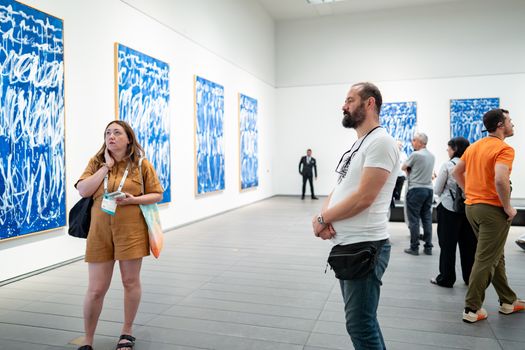
Visitors in an art gallery engaging with blue abstract artworks. Captured indoors with contemporary art, diverse visitors enhancing the scene. Photo: This And No Internet 25 / Pexels
Engaging with the diverse types of visual arts can be an incredibly enriching experience, but it often helps to have a framework for appreciation and understanding. Whether you're a budding enthusiast or a seasoned art lover, certain approaches can deepen your connection to and comprehension of artistic works. Here are some tips for navigating the nuances of visual arts and enhancing your engagement. **Tips for Enhanced Art Appreciation:** * **Research the Context:** Before or after viewing an artwork, take time to learn about the artist, the historical period, the cultural background, and any specific movements or philosophies that influenced its creation. Understanding the context can unlock layers of meaning you might otherwise miss. * **Consider the Medium and Technique:** Pay attention to *how* the art was made. The choice of material (oil paint, bronze, pixels) and the technique (brushstrokes, carving, coding) significantly impact the final aesthetic and the artist's message. For example, the texture of impasto in a painting versus the smooth surface of a digital print tells different stories. * **Engage Your Senses (Beyond Sight):** While visual arts are primarily seen, consider the implied sensations. Does a sculpture suggest weight or lightness? Does a painting evoke a certain smell or sound? Think about the emotional impact and the feelings the artwork stirs within you. * **Look for Elements of Design:** Familiarize yourself with basic art elements like line, shape, color, texture, form, space, and value, as well as principles of design such as balance, contrast, emphasis, movement, pattern, rhythm, and unity. Consciously identifying these elements can help you analyze and articulate what you see. * **Visit Galleries and Museums:** There's no substitute for experiencing art firsthand. The scale, texture, and presence of an artwork are often lost in reproduction. Visiting physical spaces allows for deeper immersion and often provides valuable interpretive information through labels and guided tours. * **Don't Be Afraid to Dislike (or Like!):** Art is subjective. It's okay to have preferences. The goal isn't necessarily to like every piece, but to understand *why* you react the way you do. Your personal response is a valid part of the art experience. * **Discuss and Share:** Talk about art with others. Hearing different perspectives can illuminate aspects you hadn't considered and broaden your understanding. Art is a conversation, and engaging in it enriches your own interpretation. * **Experiment with Creation:** Even if you don't consider yourself an artist, trying your hand at drawing, painting, or photography can provide invaluable insight into the challenges and decisions artists face. This experiential learning fosters empathy and deeper appreciation for the craft. By adopting these strategies, you can move beyond simply seeing art to truly experiencing and understanding the diverse and profound world of visual arts. Each artwork, regardless of its type, offers a unique window into human creativity and the myriad ways we interpret and communicate our world.

Comparison

FeaturePaintingSculptureDigital Art
Primary Dimension2D (Surface)3D (Space)2D/3D (Virtual)
Key Material ExamplesOil, Acrylic, WatercolorStone, Bronze, WoodSoftware, Pixels, Code
Tangibility✓ (Physical Canvas)✓ (Physical Object)✗ (Often Ephemeral)
Ease of ReproductionMediumLowHigh (Perfect Copies)

What Readers Say

"This article on different types of visual arts explained everything so clearly! I always felt intimidated by art, but now I feel like I have a solid foundation to explore more. The historical context for each art form was particularly helpful."

Sarah J. · Austin, TX

"As an aspiring artist, understanding the nuances between different types of visual arts explained here has significantly broadened my perspective. The distinction between fine and applied arts was a revelation, inspiring me to experiment across mediums."

Mark D. · Brooklyn, NY

"I used this guide to prepare for a gallery visit, and it made the experience so much richer. I could identify styles and techniques I wouldn't have noticed before. Truly a fantastic resource for anyone wanting to appreciate art more deeply."

Emily R. · San Francisco, CA

"A comprehensive overview of different types of visual arts explained in an accessible way. While I wished for a bit more on contemporary performance art, the sections on traditional and digital forms were incredibly detailed and informative."

David L. · Chicago, IL

"I'm a teacher, and this article is perfect for introducing my students to the vast world of visual arts. The breakdown of each category and the tips for appreciation are exactly what I needed to make art history engaging for young learners."

Jessica M. · Miami, FL

Frequently Asked Questions

What is the primary difference between fine arts and applied arts?

Fine arts, like painting and sculpture, are primarily created for aesthetic appreciation or intellectual stimulation. Applied arts, such as graphic design or ceramics, integrate artistic design with functional objects, serving both a practical purpose and an aesthetic one. The distinction often lies in their intended purpose and utility.

Is photography considered a fine art?

Absolutely. While initially debated, photography has long been recognized as a legitimate fine art form. It allows artists to express ideas, capture emotions, and create compelling compositions, much like traditional painting, but using light and lenses as its medium.

How can I start appreciating visual art if I feel overwhelmed?

Start by focusing on what genuinely interests you. Visit a local gallery or museum, even if it's just for an hour, and observe what catches your eye. Read the accompanying descriptions, and don't be afraid to form your own opinions. The key is engagement and curiosity, not immediate expertise.

Do digital art forms have the same value as traditional art?

Yes, digital art forms are increasingly recognized for their artistic merit and cultural significance. While the medium is new, the principles of composition, expression, and creativity remain the same. Their value is determined by their originality, impact, and the artist's skill, just like traditional art.

What is the role of context in understanding different types of visual arts explained?

Context is crucial. Understanding the historical period, cultural background, artist's biography, and societal influences surrounding an artwork can profoundly change its interpretation. It helps you grasp the artist's intentions, the symbolism used, and the messages conveyed, making the art more meaningful.

Who should explore different types of visual arts?

Anyone interested in human creativity, history, culture, or personal expression should explore visual arts. It's for students, educators, casual observers, aspiring artists, and anyone seeking to broaden their understanding of the world and themselves through diverse creative lenses.

Are there any 'risks' in engaging with art?

The only 'risk' is perhaps being challenged intellectually or emotionally, which is often a positive outcome. Art can provoke thought, question norms, and evoke strong feelings. There are no physical risks in passive engagement, and active engagement is generally safe and enriching.

What future trends are expected in visual arts?

Future trends in visual arts are likely to heavily involve augmented reality (AR), virtual reality (VR), artificial intelligence (AI) generated art, and increasingly interactive and immersive experiences. Artists will continue to experiment with new technologies, pushing the boundaries of what visual art can be and how it's experienced.

Embark on your journey through the incredible world of visual arts today. With the different types of visual arts explained in this guide, you're now equipped to appreciate the depth and breadth of human creativity, fostering a richer understanding of our shared cultural heritage.

Topics: different types of visual arts explainedvisual art formsart historycontemporary artart appreciation
Leo List
Brampton weed
Adultwork EstrelaBet Vai de Bet R7 Bet Betão Galera Bet Rainbet Bet9ja Shop SportyBet BetKing Sisal Loto Foot Hollywoodbets YesPlay Odibets RushBet Jugabet BetWarrior BetCity MSport betPawa Fortebet