Your Essential Car Rental Germany Fuel Policy Guide
Car Rental Germany Fuel Policy Guide

Your Essential Car Rental Germany Fuel Policy Guide

Master German car rental fuel policies to ensure a smooth, cost-effective journey and avoid unexpected charges.

Understand Policies Now

Key Takeaways

  • ✓ Fuel policies significantly impact rental costs.
  • ✓ Full-to-Full is generally the most economical option.
  • ✓ Pre-paid fuel often incurs hidden service fees.
  • ✓ Returning a car with less fuel than agreed incurs penalties.
  • ✓ Always clarify the fuel type (petrol/diesel) for your rental.

How It Works

1
Choose Your Policy

When booking your rental car in Germany, you'll be presented with various fuel policy options. Carefully review each one, understanding how it affects your responsibilities upon return.

2
Document Fuel Level

Upon pickup, always photograph or note the exact fuel level shown on the dashboard. This serves as crucial evidence in case of disputes, ensuring you're not charged for fuel discrepancies.

3
Refuel Strategically

If you opted for a 'Full-to-Full' policy, plan to refuel close to the return location. Use a reputable petrol station and keep the receipt as proof of refuelling to the agreed level.

4
Return and Verify

Return the vehicle according to your chosen policy. If issues arise, refer to your documentation and policy terms. Ensure the final inspection confirms the fuel level and avoids additional charges.

Decoding Car Rental Germany Fuel Policies: The Basics
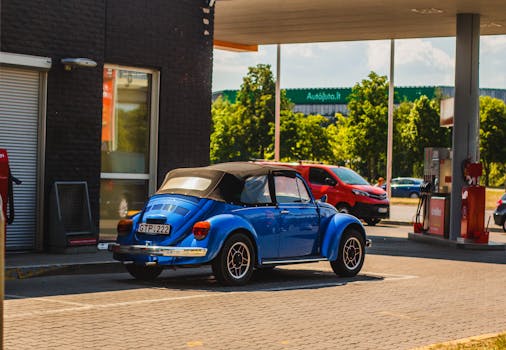
Blue vintage Volkswagen Beetle parked at modern gas station on a sunny day. Photo: Vilius Liulys / Pexels
Embarking on a road trip across Germany offers an unparalleled sense of freedom, from cruising the legendary Autobahn to exploring picturesque villages. However, before you hit the open road, one crucial aspect of your car rental agreement demands your full attention: the fuel policy. Often overlooked in the excitement of planning a European adventure, the fuel policy can significantly impact the final cost of your rental and, if misunderstood, lead to frustrating and avoidable charges. In Germany, as with most international car rental services, several common fuel policies are offered, each with its own set of rules and potential pitfalls. Understanding these nuances is not just about saving money; it's about ensuring a smooth, transparent, and stress-free rental experience. The most prevalent options you'll encounter include 'Full-to-Full,' 'Full-to-Empty' (often with a pre-purchase option), and less commonly, 'Pre-purchase with Partial Refund.' Each policy is designed to cater to different travel styles and preferences, but not all are created equal in terms of value or convenience. The 'Full-to-Full' policy, for instance, is widely regarded as the most transparent and often the most economical choice. It's straightforward: you pick up the car with a full tank and are expected to return it with a full tank. This puts you in control of where and when you refuel, allowing you to seek out the best fuel prices in Germany, which can vary significantly between autobahn service stations and local towns. Contrast this with 'Full-to-Empty,' where you pay for a full tank upfront and are encouraged to return the car as empty as possible. While this might seem convenient, the fuel price charged by the rental company is usually higher than pump prices, and you rarely manage to return the tank perfectly empty, meaning you've paid for fuel you didn't use. This guide will meticulously break down each of these policies, providing you with the knowledge to make an informed decision that aligns with your travel plans and budget. We'll explore the pros and cons, highlight potential hidden costs, and offer practical tips to help you navigate the German fuel landscape like a seasoned local. Knowing your fuel policy inside and out can save you considerable euros and prevent unpleasant surprises when you return the vehicle. It's an essential component of smart travel planning, especially when traversing a new country. Don't let a misunderstanding about fuel overshadow the beauty of your German journey; empower yourself with knowledge. For more general advice on car rentals, check out our guide on international car rental tips.

Navigating the 'Full-to-Full' Fuel Policy: Your Best Bet

The 'Full-to-Full' fuel policy stands out as the most recommended option for car rentals in Germany, primarily due to its transparency and cost-effectiveness. This policy is simple: you receive the vehicle with a full tank of fuel, and the expectation is that you return it with a full tank. If you fail to refill the tank completely, the rental company will charge you for the missing fuel, often at a premium rate that includes a service fee. The beauty of 'Full-to-Full' lies in the control it gives you. You are responsible for buying your own fuel, which means you can shop around for the most competitive prices. Fuel prices in Germany can fluctuate, and prices at Autobahn service stations are typically higher than those found in towns or cities. By planning your refuelling strategically, you can save a significant amount of money over the course of your trip. Before you drive off the lot, it is absolutely critical to verify that the fuel tank is indeed full. Take a photo of the dashboard showing the full fuel gauge as proof. This simple step can prevent disputes later on, especially if the previous renter did not return the car with a full tank and the rental agent overlooked it. Similarly, when returning the vehicle, make sure to refuel just before dropping it off. Ideally, choose a petrol station a few kilometers from the return location to ensure the gauge still reads full upon arrival. Always keep your refuelling receipt as proof. Some rental companies may ask to see it, and it serves as undeniable evidence that you fulfilled your end of the agreement. The 'Full-to-Full' policy eliminates the risk of paying inflated fuel prices set by the rental company and avoids additional service charges for refuelling on their part. While it requires a bit more planning on your end, the financial benefits and peace of mind it offers are well worth the effort. It aligns perfectly with a budget-conscious traveler's approach, allowing for predictable expenses without hidden surcharges. This policy also promotes fair usage, as you only pay for the fuel you actually consume, at the price you secured. For those who prioritize clarity and value, there is no better choice when renting a car in Germany. Understanding how to manage this policy correctly ensures a smooth return process and protects your wallet from unnecessary costs. It’s the gold standard for a reason, offering simplicity and fairness in equal measure, and should be your default choice whenever available.

Our partners at Rental Car Germany offer related services.

Understanding 'Full-to-Empty' and Pre-Paid Fuel Options

While 'Full-to-Full' is generally the most advantageous, you will inevitably encounter other fuel policies, most notably 'Full-to-Empty' or variations involving pre-paid fuel. These options, while seemingly convenient, often come with hidden costs and less value for the renter. With a 'Full-to-Empty' policy, you typically pay for a full tank of fuel at the time of pickup, and then you are expected to return the car with as little fuel as possible, as there is no refund for unused fuel. The primary allure of this policy is the perceived convenience of not having to worry about refuelling before returning the car, especially if you're in a hurry to catch a flight. However, this convenience comes at a premium. The price per liter charged by the rental company under this policy is almost always significantly higher than what you would pay at a public petrol station. This effectively means you are overpaying for the fuel from the outset. Furthermore, it's incredibly challenging, if not impossible, to return the car with a perfectly empty tank. Any fuel left in the tank upon return represents money you've paid for but not utilized, essentially a loss for you and a gain for the rental company. This 'leftover fuel' often amounts to several liters, adding up to a noticeable sum over a typical rental period. Some rental companies offer a 'Pre-purchase with Partial Refund' option, which is a slight variation. Here, you still pay for a full tank upfront, but if you return the car with a certain amount of fuel (e.g., a quarter tank or more), you might get a partial refund for the unused fuel. While better than no refund at all, the terms for these refunds can be complex, and the per-liter price is still usually inflated. It requires you to precisely gauge your fuel consumption and return the car with just enough fuel to qualify for a refund, which can be difficult to manage. The key takeaway for any pre-paid fuel option is that it shifts the financial risk and responsibility onto the renter in a way that typically benefits the rental company. They profit from the higher fuel prices they charge and from any unused fuel. For travelers on a budget or those who simply prefer transparency, these policies are generally best avoided. Always scrutinize the terms and conditions carefully if you are considering a pre-paid option. Ask about the per-liter price, any service fees, and the refund policy. Often, the apparent convenience quickly dissolves when you calculate the actual cost. For more tips on avoiding common rental car pitfalls, refer to our guide on securing the best car rental deals.

Essential Tips and Common Mistakes to Avoid with German Car Rental Fuel

Navigating the fuel policies for your German car rental can be straightforward if you're prepared. However, several common mistakes can lead to unexpected charges and frustration. Here are essential tips to ensure a smooth experience and pitfalls to avoid: * **Always read the fine print:** Before signing any rental agreement, meticulously review the fuel policy section. If anything is unclear, ask for clarification. Don't assume anything. This is your first line of defense against hidden fees. * **Document fuel levels at pickup:** As mentioned, take a photo or video of the fuel gauge when you pick up the car. Also, note the odometer reading. This provides irrefutable evidence of the car's condition and fuel level at the start of your rental. * **Understand fuel types:** Germany uses different fuel types: 'Super' (petrol/gasoline), 'Super E10' (petrol with higher ethanol content), and 'Diesel.' Your rental car will clearly indicate the required fuel type. Using the wrong fuel can cause severe engine damage, for which you will be fully liable. Double-check before pumping! * **Locate petrol stations before returning:** If you're on a 'Full-to-Full' policy, plan your last refuel carefully. Use a navigation app to find petrol stations near your drop-off location. Avoid Autobahn service stations if possible, as their prices are often significantly higher than those in towns. * **Keep your refuelling receipts:** For 'Full-to-Full,' always keep the receipt from your final refuel as proof. This can be critical if there's a dispute about the tank being less than full upon return. * **Avoid pre-paid fuel policies:** Unless you are absolutely certain you will use every drop and the convenience outweighs the cost, steer clear of pre-paid options. They rarely offer good value and often result in you paying for fuel you don't use. * **Don't rely on the rental company to refuel:** If you return the car with less fuel than required (under a 'Full-to-Full' policy), the rental company will refuel it for you. However, they will charge you not only for the fuel at an inflated rate but also a significant service fee for their time. This is one of the quickest ways to incur an unexpected charge. * **Check for damage upon return:** While not directly fuel-related, always do a final walk-around inspection with a rental agent upon return, if possible. This ensures no new damage is attributed to you, which can sometimes be a distraction from other charges. Confirm the fuel level is noted correctly by the agent. * **Factor in payment methods for fuel:** Most German petrol stations accept major credit cards, but it's always wise to have some cash on hand, especially in smaller, rural areas, just in case. Self-service pumps are common, and some may require you to pay inside after filling up. Following these tips will help you avoid common pitfalls and ensure your Car Rental Germany Fuel Policy Guide experience is as smooth and cost-effective as possible.

Comparison

FeatureFull-to-Full (Recommended)Full-to-Empty (Pre-paid)Pre-purchase with Partial Refund
Cost per LiterMarket rate (lowest)Rental company's inflated rateRental company's inflated rate
ConvenienceRequires refuel before returnNo refuel needed on returnPartial refuel for refund
Refund for Unused FuelN/A (you buy what you use)✓ (conditional)
Control over Fuel Price✓ (you choose station)✗ (set by rental company)✗ (set by rental company)
TransparencyHighLow (hidden profit margins)Moderate (complex terms)
Risk of Extra ChargesLow (if refueled correctly)Low (for refuel itself)Moderate (missing refund criteria)

What Readers Say

"This Car Rental Germany Fuel Policy Guide saved me so much hassle! I always pick 'Full-to-Full' now and keep my receipts. Last trip, the agent tried to charge me for missing fuel, but my photo and receipt cleared it up instantly. Absolutely essential knowledge."

Eleanor Vance · Boston, MA

"Before reading this, I once fell for the 'Full-to-Empty' trap in Germany. Ended up paying double for fuel I barely used. This guide perfectly outlines why 'Full-to-Full' is superior. My last rental was smooth and significantly cheaper on fuel."

Marcus Chen · Seattle, WA

"The advice on documenting fuel levels and keeping receipts from this Car Rental Germany Fuel Policy Guide is golden. I followed it for my Black Forest trip, and when a discrepancy arose, I had all the proof. Saved me 75 Euros in unjust charges!"

Sophia Rodriguez · Austin, TX

"Very comprehensive guide. I always get 'Full-to-Full', but the tips on checking fuel type and avoiding Autobahn stations for refuel were particularly helpful. It's a bit more effort to refuel before returning, but the savings are real."

David Miller · Chicago, IL

"As a frequent traveler to Germany for art exhibitions, I rent cars often. This Car Rental Germany Fuel Policy Guide is spot on. The comparison table is fantastic for quick reference, and the 'mistakes to avoid' section is spot-on for both new and experienced renters."

Chloe Adams · Denver, CO

Frequently Asked Questions

What is the most common and recommended fuel policy for car rentals in Germany?

The 'Full-to-Full' fuel policy is by far the most common and highly recommended option. With this policy, you pick up the car with a full tank and are expected to return it with a full tank. It offers the most transparency and allows you to control where and when you refuel, often leading to significant cost savings compared to other options.

Why should I avoid 'Full-to-Empty' or pre-paid fuel options?

'Full-to-Empty' and pre-paid fuel options typically charge you an inflated price per liter for fuel, much higher than local pump prices. Additionally, you rarely use all the fuel you've paid for, meaning you effectively pay for unused fuel. These policies also often include hidden service fees, making them less economical despite their perceived convenience.

How do I ensure I don't get charged extra for fuel when returning my rental car?

To avoid extra charges, always choose a 'Full-to-Full' policy. Upon pickup, photograph the full fuel gauge. Before returning, refuel the car completely at a local petrol station (avoiding expensive Autobahn stations) and keep the receipt as proof. Present this proof if any dispute arises upon return.

Are fuel prices in Germany significantly different depending on the location?

Yes, fuel prices in Germany can vary noticeably. Petrol stations located directly on the Autobahn (motorway) or at service areas tend to have higher prices compared to those found in towns, cities, or just off major highways. Planning your refuelling stops can lead to considerable savings over your trip.

What happens if I put the wrong type of fuel in my rental car?

Putting the wrong type of fuel (e.g., diesel instead of petrol, or vice-versa) into your rental car can cause severe and extensive engine damage. You will be held fully responsible for all repair costs, which can be thousands of euros. Always double-check the fuel cap and rental agreement for the correct fuel type before filling up.

Who should pay close attention to the Car Rental Germany Fuel Policy Guide?

Anyone planning to rent a car in Germany, particularly those who are budget-conscious, first-time renters, or travelers who prefer transparency and wish to avoid unexpected charges, should pay close attention to this guide. Understanding fuel policies is crucial for a stress-free and cost-effective rental experience.

Is it safe to pay for fuel with a credit card at German petrol stations?

Yes, most modern German petrol stations accept major credit cards (Visa, MasterCard). However, it's always a good idea to have some cash (Euros) on hand, especially if you're in a more rural area or in case of a card reader malfunction. Some self-service pumps might require payment inside after refuelling.

How might fuel policies evolve in Germany with the rise of electric vehicles?

As electric vehicles (EVs) become more prevalent in rental fleets, fuel policies will likely evolve into 'charge policies.' This could involve returning an EV with a certain battery percentage, similar to 'Full-to-Full,' or pre-paying for charging credits. Hybrid vehicles might combine aspects of both traditional fuel and new charging policies.

Armed with this comprehensive Car Rental Germany Fuel Policy Guide, you're now ready to confidently navigate your next German adventure without fuel-related surprises. Choose wisely, document everything, and enjoy the open road with complete peace of mind. Happy travels!

Topics: Car Rental Germany Fuel Policy GuideGermany car hire fuelfuel options Germany rentalrental car refuelling Germanyavoid fuel surcharges Germany
Leo List
Brampton weed
Adultwork