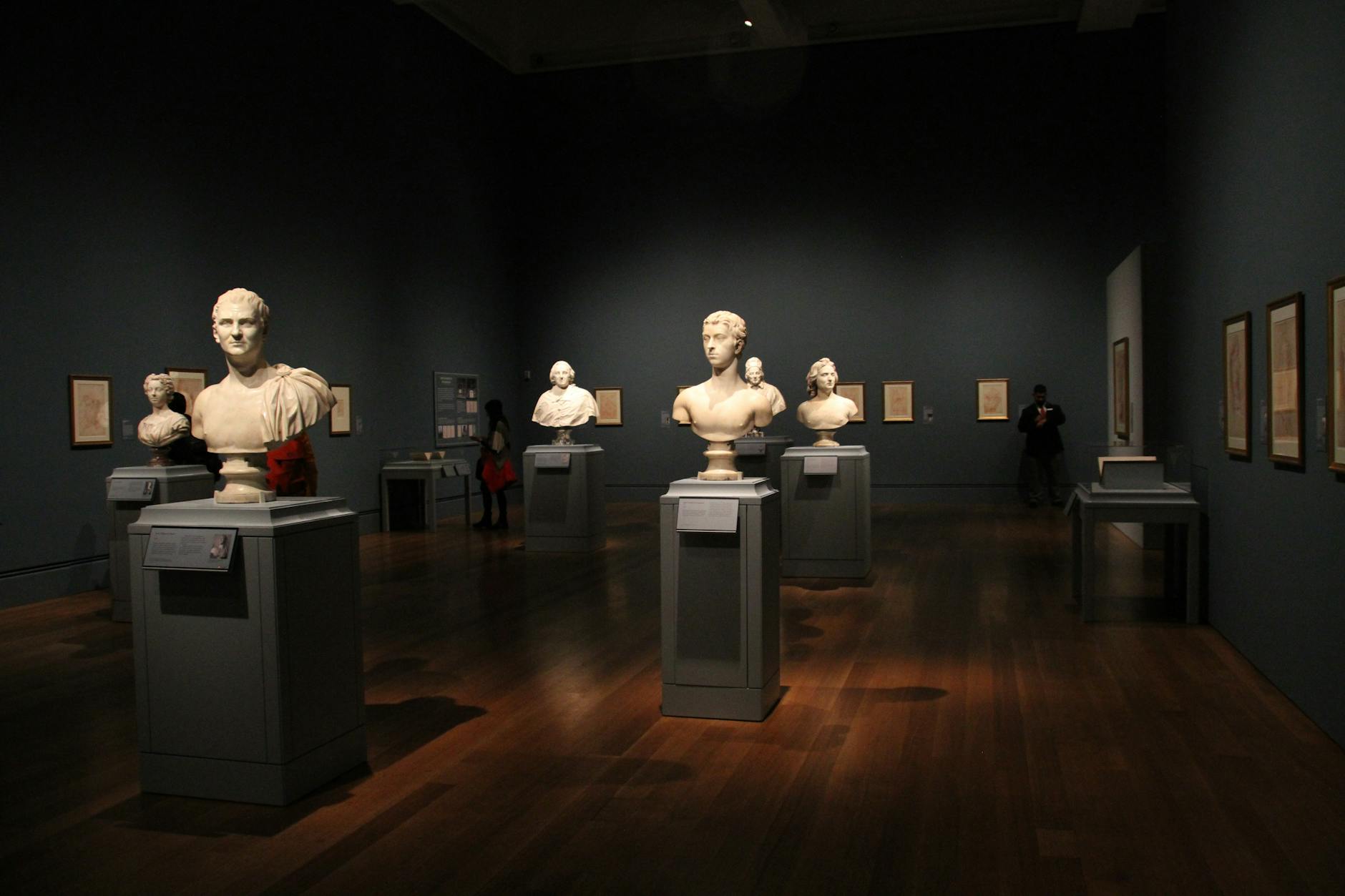
Mastering the Art History Timeline: Ancient to Modern
art history timeline ancient to modern

Mastering the Art History Timeline: Ancient to Modern

Unravel the vast tapestry of human creativity, from prehistoric caves to contemporary masterpieces.

Begin Your Journey

Key Takeaways

  • ✓ Art history spans over 40,000 years, beginning with prehistoric cave paintings.
  • ✓ Major shifts in art often coincide with significant cultural, religious, and technological advancements.
  • ✓ The Renaissance marked a profound return to classical ideals and humanism in art.
  • ✓ Modern art movements, starting in the late 19th century, radically redefined the purpose and form of art.

How It Works

1
Explore Ancient Foundations

Delve into the earliest forms of human expression, from cave art to the grand monuments of Egypt and Mesopotamia. Understand the symbolic and ritualistic functions of early art.

2
Navigate Classical & Medieval Eras

Journey through the idealized forms of Greek and Roman art, then transition to the spiritual narratives and intricate craftsmanship of the Byzantine and Gothic periods. Witness the evolving relationship between art and faith.

3
Discover Renaissance & Baroque Masterpieces

Experience the rebirth of classical learning, perspective, and naturalism during the Renaissance, followed by the dramatic emotion and grandeur of the Baroque. Observe how art became a tool for both devotion and power.

4
Unpack Modern & Contemporary Revolutions

Trace the radical shifts from Neoclassicism to Romanticism, Impressionism, Cubism, and beyond. Understand how artists continually challenged conventions and explored new ways of seeing and representing the world up to the present day.

The Dawn of Creativity: Prehistoric & Ancient Civilizations
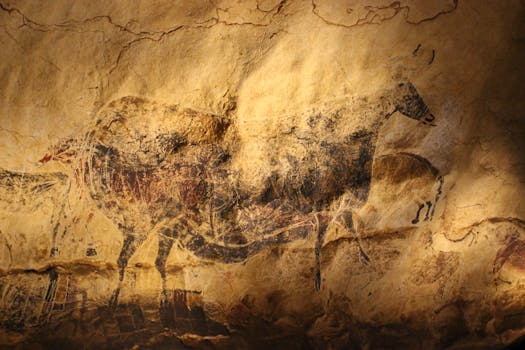
Explore the historic Lascaux cave painting, a UNESCO World Heritage site. Photo: toshihiko tanaka / Pexels
The story of art begins long before written history, with the earliest human expressions etched into cave walls and carved from natural materials. The Prehistoric era, spanning from the Stone Age (Paleolithic, Mesolithic, Neolithic) to the early Bronze Age, laid the foundational groundwork for all subsequent artistic endeavors. Paleolithic art, exemplified by the breathtaking cave paintings at Lascaux and Chauvet in France, or Altamira in Spain, showcases early humans' profound connection to the natural world, depicting animals with striking realism and vitality. These images, often found deep within caves, likely served ritualistic or spiritual purposes, perhaps for hunting magic or recording significant events. Hand stencils and enigmatic symbols also feature prominently, hinting at complex belief systems. The Venus figurines, small sculptures of exaggerated female forms, suggest early concerns with fertility and reproduction. As humans transitioned into the Neolithic period, marked by the advent of agriculture and settled communities, art began to reflect these changes. Pottery emerged as a significant art form, adorned with geometric patterns and stylized motifs. Megalithic structures, such as Stonehenge, demonstrate sophisticated architectural and engineering skills, often aligned with astronomical events, underscoring a deep understanding of the cosmos and a communal effort in creation. These monuments were not merely functional but imbued with symbolic and sacred meaning, acting as gathering places, burial sites, or observatories. With the rise of the first great civilizations, art transformed dramatically. In ancient Mesopotamia (Sumerians, Akkadians, Babylonians, Assyrians), art served to glorify rulers, depict religious narratives, and record historical events. Cylinder seals, elaborate carved stelae (like the Stele of Hammurabi), and massive ziggurats adorned with intricate reliefs are hallmarks of this period. Egyptian art, enduring for millennia, is characterized by its strict conventions, monumental scale, and unwavering focus on the afterlife. From the iconic pyramids and sphinxes to the hieroglyphs, tomb paintings, and intricate funerary objects like Tutankhamun's mask, Egyptian art was designed for eternity, emphasizing order, permanence, and a belief in cosmic balance. Stylized figures, often depicted in a composite view (frontal torso, profile head and legs), adhered to rigid canons that ensured continuity across generations. Understanding these early artistic expressions is crucial to appreciating the trajectory of human creativity. Moving into the Aegean civilizations, the Minoans on Crete developed a vibrant, curvilinear style, seen in their frescoes depicting marine life, palace rituals, and graceful figures, suggesting a more joyful and less rigid society. The Mycenaeans on mainland Greece, by contrast, created fortified citadels and gold funerary masks (like the Mask of Agamemnon), indicative of a warlike culture. These ancient periods, though geographically and culturally diverse, collectively illustrate humanity's innate drive to create, communicate, and leave an enduring mark on the world, often intertwined with religious beliefs, social structures, and the very survival of their communities. The scale and ambition of these early works continue to captivate and inspire, reminding us of the deep historical roots of artistic practice.

Classical Ideals to Spiritual Narratives: Greece, Rome, & the Middle Ages
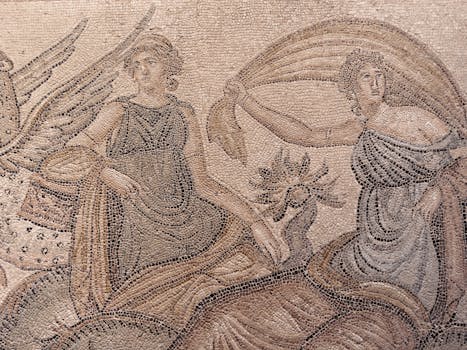
Detailed view of an ancient Roman mosaic artwork in Gaziantep, Türkiye. Photo: Niyazi Gökdoğan / Pexels
The Classical era, dominated by ancient Greece and Rome, represents a pivotal moment in the art history timeline ancient to modern, establishing aesthetic principles that would resonate for centuries. Greek art, particularly from the Archaic, Classical, and Hellenistic periods, prioritized humanism, idealized beauty, proportion, and harmony. Early Archaic sculptures, like the Kouros and Kore figures, show Egyptian influence but quickly evolved towards greater naturalism and movement. The Classical period (c. 480-323 BCE) is considered the zenith, with artists like Phidias creating masterpieces for the Parthenon, embodying a pursuit of perfection and civic virtue. Sculptures like the Doryphoros (Spear Bearer) by Polykleitos codified the ideal human form through mathematical ratios. Greek architecture, with its distinct Doric, Ionic, and Corinthian orders, emphasized balance, symmetry, and functionality, profoundly influencing Western building traditions. The Hellenistic period (c. 323-31 BCE) introduced more dramatic emotion, theatricality, and individualism, as seen in works like the Laocoön Group and the Winged Victory of Samothrace. Roman art, while heavily influenced by Greek precedents, developed its own distinctive character, often emphasizing realism, narrative, and imperial power. Roman portraiture, unlike idealized Greek forms, captured individual likenesses with remarkable accuracy. Their architectural innovations, particularly in engineering, led to the construction of vast public works such as aqueducts, basilicas, and amphitheatres (like the Colosseum), utilizing concrete and the arch to create unprecedented scale and durability. Relief sculpture, exemplified by the historical narratives on Trajan's Column and the Arch of Titus, served as powerful propaganda, celebrating military victories and imperial achievements. Frescoes and mosaics adorned villas and public buildings, depicting daily life, mythological scenes, and landscapes. Following the decline of the Roman Empire, the Middle Ages (c. 500-1400 CE) saw a profound shift in artistic focus, largely driven by Christianity. Early Christian art initially adapted Roman forms, but gradually developed distinct styles. Byzantine art, centered in Constantinople, was characterized by its rich mosaics, iconic religious images, and a hierarchical, spiritual emphasis. Figures were often elongated, ethereal, and adorned with opulent gold backgrounds, conveying divine majesty rather than earthly realism. Illuminated manuscripts, meticulously hand-copied and illustrated religious texts, became crucial vehicles for artistic expression and theological dissemination. In Western Europe, the Romanesque period (c. 1000-1200 CE) saw the construction of massive stone churches with barrel vaults, adorned with monumental sculpture depicting biblical narratives, intended to instruct and inspire the largely illiterate populace. Figures were often stylized and compressed to fit architectural spaces. The Gothic era (c. 1150-1400 CE) brought about revolutionary architectural innovations like the pointed arch, ribbed vault, and flying buttress, allowing for soaring cathedrals with vast stained-glass windows that flooded interiors with divine light. Sculpture became more naturalistic, with figures emerging from the architectural framework, displaying greater emotional depth. Artists like Giotto, in the late Gothic period, began to introduce a new sense of realism and spatial depth, foreshadowing the Renaissance. This transition from classical humanism to Christian spirituality and back again forms a compelling narrative in the evolution of art.

Rebirth & Revolution: Renaissance to Modernism's Edge
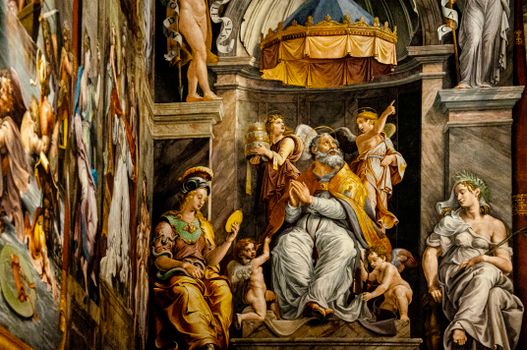
Intricate Renaissance painting depicting religious figures in Vatican City. Photo: Jing Zhan / Pexels
The Renaissance (c. 1400-1600 CE), meaning 'rebirth,' marked a profound resurgence of classical ideals combined with a new emphasis on humanism, scientific inquiry, and individual genius. Originating in Italy, this period radically transformed Western art. Early Renaissance artists like Masaccio pioneered linear perspective, creating illusions of three-dimensional space on a two-dimensional surface. Donatello revived free-standing bronze sculpture. The High Renaissance (late 15th-early 16th century) saw the rise of titans like Leonardo da Vinci, whose 'Mona Lisa' and 'Last Supper' exemplify psychological depth and sfumato; Michelangelo, whose 'David' and Sistine Chapel frescoes showcase unparalleled mastery of human anatomy and emotional power; and Raphael, known for his harmonious compositions and serene Madonnas. Venetian artists like Titian explored vibrant color and sensuality. The Northern Renaissance, meanwhile, focused on meticulous detail, rich symbolism, and oil painting techniques, with artists like Jan van Eyck and Albrecht Dürer creating deeply expressive works. Following the High Renaissance, Mannerism (c. 1520-1600 CE) emerged as a reaction, characterized by elongated forms, artificial poses, dramatic lighting, and complex compositions, often distorting classical proportions to express emotional intensity. Artists like Parmigianino and El Greco pushed the boundaries of aesthetic convention. The Baroque period (c. 1600-1750 CE) burst forth with drama, grandeur, and intense emotion, often serving the Counter-Reformation and absolute monarchies. Artists like Caravaggio employed dramatic chiaroscuro and tenebrism to create powerful, theatrical scenes, while Gian Lorenzo Bernini sculpted dynamic, emotionally charged figures and magnificent architectural ensembles. In the Netherlands, Rembrandt explored psychological depth and inner light, and Vermeer captured intimate domestic scenes with luminous precision. Rubens, in Flanders, created dynamic, opulent compositions. Succeeding the Baroque, the Rococo period (c. 1700-1780 CE) offered a lighter, more playful, and ornamental style, characterized by pastel colors, curvilinear forms, and themes of aristocratic leisure and romance, as seen in works by Watteau and Fragonard. This was followed by Neoclassicism (c. 1750-1850 CE), a return to the severe grandeur and moralizing themes of classical antiquity, championed by artists like Jacques-Louis David, who used art to promote revolutionary ideals and civic virtue. Romanticism (c. 1800-1850 CE) emerged concurrently, emphasizing emotion, individualism, the sublime in nature, and the dramatic, with artists like Eugène Delacroix and J.M.W. Turner exploring intense feeling and dynamic compositions. This era set the stage for the radical shifts of modern art, where the very definition of art would be continually challenged and redefined, pushing the boundaries of representation and expression, leading to a profound transformation in how we understand and engage with visual culture. This continuous evolution from the highly structured classical forms to the emotional and conceptual explorations of the late 19th century marks a significant turning point in the art history timeline ancient to modern, laying the groundwork for the explosion of styles that would define the 20th century.

The Modern Explosion: Impressionism to Contemporary Art
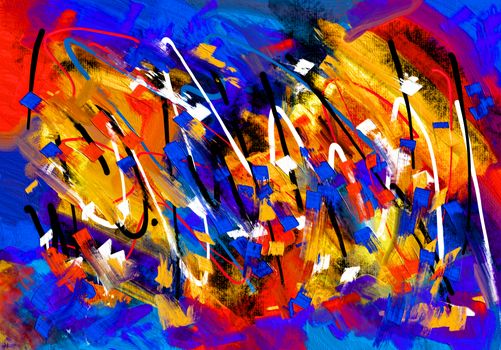
Dynamic abstract acrylic painting with bold colors and energetic patterns. Photo: Steve A Johnson / Pexels
The late 19th and 20th centuries witnessed an unprecedented explosion of artistic movements, fundamentally redefining the art history timeline ancient to modern. This period, often termed Modern Art, challenged traditional academic conventions, moving away from strict representation towards individual expression, subjective perception, and formal experimentation. Each movement built upon or reacted against its predecessors, creating a dynamic and often bewildering array of styles. **Key Modern Art Movements:** * **Impressionism (1860s-1880s):** Spearheaded by artists like Claude Monet, Pierre-Auguste Renoir, and Edgar Degas, Impressionism focused on capturing fleeting moments, the effects of light and atmosphere, and the subjective perception of reality. They used broken brushstrokes and vibrant colors, often painting outdoors (en plein air). * **Post-Impressionism (1880s-1900s):** Artists like Vincent van Gogh, Paul Cézanne, Paul Gauguin, and Georges Seurat pushed Impressionism's boundaries, emphasizing emotional expression, symbolic meaning, and structural form rather than mere optical impressions. * **Fauvism (1905-1908):** Led by Henri Matisse, the 'Fauves' (wild beasts) used bold, non-naturalistic colors to express emotion and create flat, decorative patterns. * **Cubism (1907-1914):** Developed by Pablo Picasso and Georges Braque, Cubism revolutionized painting by fragmenting objects into geometric shapes and depicting them from multiple viewpoints simultaneously, challenging traditional perspective. * **Expressionism (early 20th century):** Groups like Die Brücke and Der Blaue Reiter (Ernst Ludwig Kirchner, Franz Marc) expressed intense subjective emotion through distorted forms and vivid colors, often reflecting societal anxieties. * **Futurism (1909-1916):** An Italian movement celebrating speed, technology, youth, and violence, often depicting dynamic motion and the exhilaration of modern life. * **Dada (1916-1924):** A nihilistic anti-art movement born from the horrors of WWI, Dadaists (Marcel Duchamp, Man Ray) challenged logic and reason, often using readymades and nonsense to critique societal values. * **Surrealism (1920s-1960s):** Influenced by Freudian psychoanalysis, Surrealists (Salvador Dalí, René Magritte) explored the subconscious mind, dreams, and irrational juxtapositions to unlock new realities. * **Abstract Expressionism (1940s-1950s):** The first major American art movement, characterized by large-scale, non-representational paintings that emphasized spontaneous, gestural brushwork and emotional intensity (Jackson Pollock, Mark Rothko). * **Pop Art (1950s-1970s):** Reacting against Abstract Expressionism, Pop artists (Andy Warhol, Roy Lichtenstein) drew inspiration from popular culture, advertising, and consumerism, using mass-produced imagery and bright colors. **Contemporary Art (1970s-Present):** Contemporary art is incredibly diverse and defies easy categorization. It encompasses a vast array of approaches, including Conceptual Art, Minimalism, Postmodernism, Performance Art, Installation Art, and Digital Art. Artists continue to challenge conventions, explore new materials and technologies, and engage with complex social, political, and cultural issues. The emphasis is often on ideas and the viewer's experience, rather than purely aesthetic concerns. Understanding these movements provides a crucial lens through which to appreciate the vast tapestry of human creativity and innovation. From the revolutionary brushstrokes of Impressionism to the conceptual provocations of contemporary artists, the journey through modern art is one of constant redefinition and boundless imagination. This trajectory underscores the dynamic nature of the art history timeline ancient to modern, where each era builds upon, reacts to, and transforms what came before, culminating in the rich and varied artistic landscape we experience today.

Comparison

Art PeriodDefining CharacteristicKey Artist(s)Medium Emphasis
Ancient (e.g., Egyptian)Immortality, rigid conventions, ritualisticUnknown Scribes/ArtisansStone sculpture, tomb painting
Classical (Greek)Idealized human form, harmony, proportionPhidias, PolykleitosMarble/bronze sculpture, architecture
RenaissanceHumanism, perspective, realism, classical revivalLeonardo, Michelangelo, RaphaelOil painting, fresco, sculpture
BaroqueDrama, emotion, grandeur, theatricalityCaravaggio, Bernini, RubensOil painting, monumental sculpture
Modern (e.g., Cubism)Fragmentation, multiple perspectives, abstractionPicasso, BraqueOil painting, collage
ContemporaryConceptual, diverse media, audience interactionBanksy, Yayoi Kusama, Ai WeiweiInstallation, performance, digital art

What Readers Say

"This article on the art history timeline ancient to modern is an absolute treasure! It breaks down complex periods into digestible, engaging sections, making centuries of art accessible. I finally feel like I have a coherent understanding of art's evolution."

Eleanor Vance · New York, NY

"As an aspiring artist, this guide is invaluable. The detailed explanations of each era's motivations and key figures really helped me connect the dots across different styles. It's a fantastic resource for anyone studying art history."

Marcus Chen · Los Angeles, CA

"I've always struggled with art history, but this article made the art history timeline ancient to modern so clear and fascinating. I now feel confident discussing various art movements, which has greatly enhanced my museum visits."

Sophia Rodriguez · Chicago, IL

"A very thorough overview that covers a massive span of time effectively. While I would have loved even more examples for some of the lesser-known periods, it's an excellent starting point and highly informative."

David Lee · Houston, TX

"This content isn't just informative; it's inspiring! It beautifully illustrates how human creativity constantly reinvents itself. I particularly appreciated the connections drawn between societal changes and artistic shifts throughout the art history timeline ancient to modern."

Priya Sharma · Seattle, WA

Frequently Asked Questions

What is the earliest known period in the art history timeline ancient to modern?

The earliest known period is the Prehistoric era, particularly the Paleolithic (Old Stone Age), which dates back tens of thousands of years. This period is characterized by cave paintings, rock carvings, and small sculptures like the Venus figurines, primarily serving ritualistic or symbolic purposes rather than aesthetic ones in the modern sense.

Is it overwhelming to learn such a vast art history timeline?

While the sheer volume of art history can seem daunting, this guide breaks it down into manageable, chronological sections. By focusing on key characteristics, influential artists, and major societal shifts for each period, you can build a strong foundational understanding without feeling overwhelmed. Think of it as a journey through human creativity, one era at a time.

How do I best study or remember the art history timeline ancient to modern?

To effectively study, try to connect art movements with historical events and cultural contexts. Use visual aids like timelines and flashcards, visit museums (virtually or in person), and pay attention to how styles evolve or react to previous ones. Grouping movements by their overarching themes (e.g., realism, abstraction, emotional expression) can also be very helpful.

What is the most significant turning point in the art history timeline?

Many art historians consider the Renaissance a pivotal turning point, as it marked a renewed interest in humanism, scientific observation, and classical ideals after the medieval period. However, the advent of Modernism in the late 19th and early 20th centuries, with its radical departure from traditional representation, is also a profoundly significant shift, changing the very definition and purpose of art.

How does modern art differ significantly from ancient art?

Ancient art often served religious, political, or commemorative functions, adhering to strict conventions and aiming for clarity and permanence. Modern art, conversely, frequently emphasizes individual expression, subjective perception, and conceptual ideas. It often challenges traditional aesthetics, explores abstraction, and questions the very nature of art itself, prioritizing innovation and personal vision over prescribed forms.

Who should explore the art history timeline ancient to modern?

Anyone with an interest in human culture, creativity, and the evolution of ideas should explore this timeline. It's particularly beneficial for students, artists, art enthusiasts, cultural tourists, and anyone seeking a deeper understanding of the visual world around them. It offers insights into different civilizations' values, beliefs, and technological advancements.

Are there any 'wrong' ways to interpret art history?

While art history involves factual information about dates, artists, and movements, interpreting the meaning and significance of art often has subjective elements. However, interpretations that ignore historical context, misattribute works, or are based on demonstrably false premises would be considered 'wrong.' A good approach involves critical thinking, research, and an open mind.

What are the future trends in the art history timeline?

The future of art is likely to continue its trajectory of interdisciplinarity and technological integration. We can expect further exploration of digital art, AI-generated art, virtual and augmented reality experiences, and art that addresses global issues like climate change and social justice. The boundaries between art, science, and technology will continue to blur, leading to ever new forms of creative expression.

Embark on your own journey through the vast and fascinating art history timeline ancient to modern. This comprehensive guide provides a solid foundation for understanding the artistic legacy of humankind, inviting you to explore the masterpieces and movements that have shaped our world. Start your exploration today and unlock a deeper appreciation for the boundless creativity of the human spirit.

Topics: art history timeline ancient to modernancient art periodsrenaissance artmodern art movementsart evolution
Leo List

DK Escorts LU Escorts AT Escorts SE Escorts FI Escorts CH Escorts DE Escorts HR Escorts IE Escorts GR Escorts CZ Escorts NO Escorts BE Escorts FR Escorts SI Escorts IL Escorts NL Escorts PL Escorts HU Escorts ES Escorts IT Escorts PT Escorts SK Escorts RO Escorts ZA Escorts UY Escorts US Escorts UK Escorts NZ Escorts AU Escorts
Brampton weed
Adultwork EstrelaBet Vai de Bet R7 Bet Betão Galera Bet Rainbet Bet9ja Shop SportyBet BetKing Sisal Loto Foot Hollywoodbets YesPlay Odibets RushBet Jugabet BetWarrior BetCity MSport betPawa Fortebet